A squint, also called strabismus, is when the eyes point in different directions. Squint in children is common, and it shouldn’t be ignored, because a constant squint or one that appears after about three months of age needs an eye check. Squint treatment depends on the cause and may include glasses, patching for a lazy eye, eye exercises in some cases, injections or squint surgery. Early assessment matters, because some vision problems may be permanent if they aren’t treated at a young age. You can request an eye appointment at Manav Hospital here.
Overview
Here’s a very common story (a hypothetical, but one paediatric eye clinics see often). A mother notices that her four-year-old’s left eye drifts inward when he’s tired or looking at a book. Her mother-in-law says, “He’ll grow out of it.” A neighbour says, “It’s the evil eye, tie a black thread.” The family doctor says, “Let’s wait and watch.” Six months pass. The drift is more frequent now, and the boy has started closing one eye in bright light.
Waiting can feel safe, but with squint it isn’t always. A child’s visual system is still developing, and the brain can start ignoring the picture from a misaligned eye. That’s how a lazy eye develops.
Our earlier guide on why a child’s eye turns inward explains the basics and causes. This guide focuses on the decision parents actually face: when to treat, what squint treatment involves, how squint glasses, patching, eye exercises for squint and squint surgery fit together and what to ask. The ophthalmology department at Manav Hospital in Kavi Nagar, Ghaziabad lists squint among its eye services. This is general information, not a diagnosis.
What Is a Squint in Children?
In plain words
● The eyes don’t point at the same place at the same time
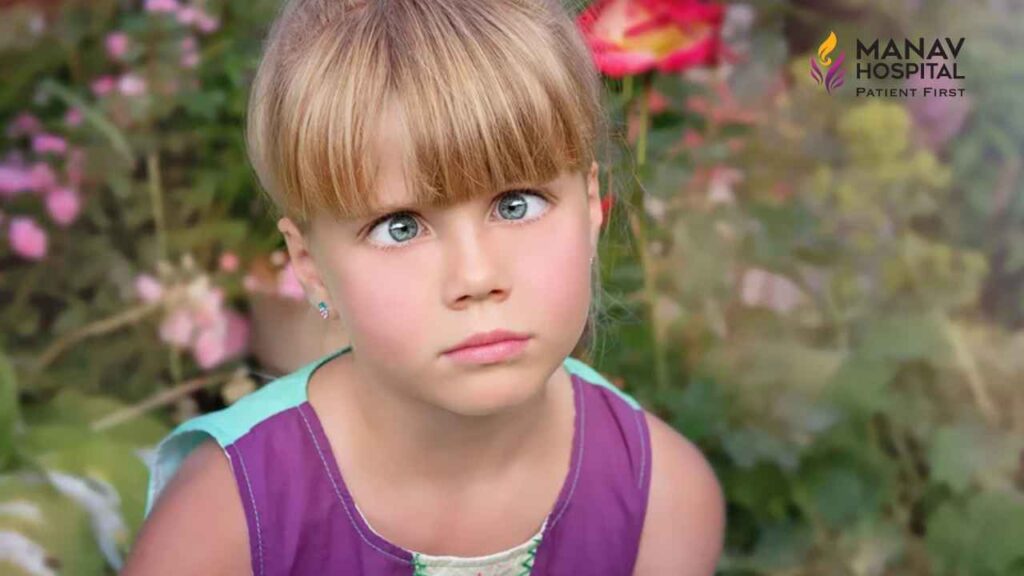
● One eye may turn in, out, up or down while the other looks ahead
● It may be constant or come and go
● It’s common in young children but can occur at any age
● Sometimes it happens because of an eyesight problem such as long-sightedness, short-sightedness or astigmatism
A squint is a signal. The goal is to find out why the eyes aren’t lining up, and to protect the vision while treating it.
Meet the Eye Team
Manav Hospital’s ophthalmology team includes Dr. Harish Gupta (Senior Ophthalmologist), Dr. Rajat Gupta and Dr. Malvika Gupta, all listed on the hospital’s doctors page. The hospital’s other doctors listing also names Dr. Ritika Gaur (MBBS, MS, FICO, FMRF) with a vitreo-retina, uvea, ROP and phaco focus.
Professional Highlights
● A dedicated ophthalmology department listing squint among its services, alongside cataract, glaucoma and retina care
● OCT and other imaging listed among equipment
● Based at Manav Hospital, 1 B Block, Kavi Nagar, Ghaziabad
Noticed your child’s eyes not lining up? Book an eye check rather than waiting for it to pass.
When Should a Child With a Squint See a Doctor?
According to the NHS, you should see a doctor if:
● The squint is present all the time
● A squint comes and goes in a child older than three months. In babies under three months, a squint that comes and goes is common and usually not a concern
● Your child turns their head to one side or keeps one eye closed
● An older child complains of double vision
The NHS also notes that a squint can occasionally be a sign of a rare childhood eye cancer called retinoblastoma, which is why a child with a squint should be checked. That’s uncommon, but it’s one more reason to take it seriously.
Lazy Eye and Amblyopia: Why Timing Matters
Lazy eye, medically called amblyopia, is when the brain starts ignoring signals from the affected eye. The NHS describes it this way. If a lazy eye results from a squint, treating it may come first.
The NHS says that untreated squints can lead to persistent blurred or double vision, a lazy eye and, for some children, embarrassment or low self-esteem. It adds that any vision problems may be permanent if they aren’t treated at a young age, though surgery can still improve eye alignment even after a long period without treatment.
So the answer to “when to treat” is: get it assessed early, then follow the plan your ophthalmologist sets.
How Is a Squint Assessed?
An eye specialist usually checks:
● How the eyes move and line up
● Vision in each eye, adjusted for your child’s age
● Whether glasses are needed, often after drops that relax the eyes’ focusing
● The health of the eyes inside, including the retina
Bring any old glasses prescriptions and note when you first saw the squint, whether it’s worse when your child is tired or unwell and whether family members had a squint.
Squint Treatment Options
The NHS lists several approaches. Which one, or which combination, depends on the cause.
1. Squint Glasses
Glasses help when the squint is linked to an eyesight problem, which is common in children. For some children, correcting long-sightedness or astigmatism improves or controls the squint. Squint glasses need to be worn consistently, and the prescription is checked regularly as your child grows.
2. Patching for a Lazy Eye
For a lazy eye, the NHS describes wearing a patch over the stronger eye so the weaker one has to work. It isn’t easy with a toddler, so ask your clinic for practical tips, such as patching during play or story time.
3. Eye Exercises for Squint
The NHS says eye exercises may sometimes help the eyes work together better. They don’t suit every squint. Be careful with websites or videos promising to fix a squint with exercises alone. Ask your eye specialist whether exercises are appropriate for your child’s type of squint.
4. Injections Into the Eye Muscles
The NHS describes injections that weaken certain eye muscles to help alignment, but says the effect usually lasts less than three months. They’re not used for every child.
5. Squint Surgery
Squint surgery moves the eye muscles so the eyes line up better. The NHS says it may be recommended if glasses aren’t fully effective. Your surgeon and anaesthetist will explain the anaesthesia and the details. The surgery adjusts alignment, and your child may still need glasses or follow-up care afterwards. Results vary, and no outcome is guaranteed.
Squint Surgery: What Parents Usually Ask
● Will it fix the vision as well? Surgery mainly improves alignment. A lazy eye may still need patching or glasses
● Is it safe? Every operation and anaesthetic carries risks. Ask your surgeon about the risks for your child, including the chance of needing further treatment
● When is the right time? The timing depends on the type of squint and your child’s age and vision. Your ophthalmologist will advise
● What’s recovery like? Ask your surgeon what to expect, including drops, activity limits and follow-up
Common Myths About Squint in Children
● “He’ll grow out of it.” Some very young babies’ wandering eyes settle, but a constant squint or one that persists needs assessment
● “Glasses will make the eyes weaker.” Glasses help the eyes focus. If you’re worried, ask your specialist to explain
● “Surgery is only for cosmetic reasons.” Surgery mainly aims to align the eyes. Improved appearance may follow, but alignment matters for how the eyes work together
● “A black thread or kajal will fix it.” Such remedies aren’t medical treatment, and they can delay proper care
● “Eye exercises alone will fix any squint.” They may help some children, but not all
How You Can Help at Home
● Keep appointments, even when your child’s eyes look better that day
● Make sure glasses are worn and kept clean
● Follow patching schedules as advised
● Praise and reward, rather than force, a reluctant child
● Tell your eye specialist about any change, such as more frequent turning or headaches
None of these replaces treatment. They support it.
Questions to Ask Your Child’s Eye Doctor
● What kind of squint does my child have, and what’s causing it?
● Is there a lazy eye as well?
● Which squint treatment do you suggest first, and why?
● Will squint glasses be enough, or might my child need surgery?
● Are eye exercises for squint appropriate here?
● How often should we come back?
● What are the risks of each option?
If your child’s vision seems to change a lot, you might also find our guide on why vision keeps changing even with glasses helpful.
Why Choose Manav Hospital for Eye Care?
Key advantages
● A dedicated ophthalmology department covering squint, cataract, retina, glaucoma, cornea and more
● Retina and cornea services listed, along with OCT imaging
● Emergency ambulance and helpline listed as 24×7
● TPA and cashless support for patients with mediclaim or health insurance, as listed on the site. Please confirm cover with the hospital
● Online appointment booking through the website
Learn more about eye care at Manav Hospital, or book an appointment.
What Are the Benefits of Early Squint Assessment?
✔ A clear reason for the eye turn
✔ A chance to protect developing vision
✔ A treatment plan matched to your child
✔ Relief from guessing and home remedies
✔ Peace of mind for the whole family
Staying Informed
Manav Hospital shares updates on Facebook, Instagram, YouTube and LinkedIn. Results vary from person to person, and no outcome is guaranteed.
Why Do Ghaziabad Patients Choose Manav Hospital?
● Multi-speciality care under one roof, from orthopaedics to ophthalmology and dental
● A 24×7 emergency ambulance and helpline listed on +91-9718942666
● Easy access in Kavi Nagar, near State Bank of India and the Post Office
● A listed ophthalmology team with retina, cataract and glaucoma services
● Online appointment and booking through the website
Conclusion
Squint in children is common, and it’s treatable, but the timing matters. If your child’s eyes don’t line up all the time, or a squint appears after the first few months, get an eye check rather than waiting and hoping. Treatment may include glasses, patching, exercises in some cases, injections or surgery, depending on the cause. If you’re worried about your child’s eyes, Manav Hospital’s eye team can assess them, and you can contact the hospital to ask about appointments.
Contact Manav Hospital
Address: 1, B Block, Kavi Nagar, Ghaziabad, Uttar Pradesh 201002
Phone and 24×7 emergency helpline: +91-9718942666
Email: info.manavhospital@gmail.com
Follow on: Facebook | Instagram | YouTube
Book your child’s eye consultation at Manav Hospital here
FAQs
When does squint treatment become necessary?
A squint that is constant, or one that comes and goes after about three months of age, should be assessed, according to the NHS. Your eye specialist decides the plan.
Is squint in children a serious problem?
It can be, because an untreated squint may lead to a lazy eye and lasting vision problems. Early assessment helps.
What is a lazy eye?
Lazy eye, or amblyopia, is when the brain starts ignoring signals from one eye. Patching or glasses may be used, and treatment is usually more effective when started early.
Does squint surgery fix lazy eye?
Surgery mainly improves alignment. A lazy eye may still need patching or glasses.
Can eye exercises for squint work?
The NHS says exercises may sometimes help the eyes work together. They don’t suit every squint, so ask your specialist.
Will squint glasses correct my child’s squint?
Glasses can help when the squint is linked to an eyesight problem, but they don’t suit every case. Results vary, and no outcome is guaranteed.
Where can I get a squint checked in Ghaziabad?
Manav Hospital’s ophthalmology department lists squint among its services. You can book an appointment to have your child’s eyes examined.