Overview
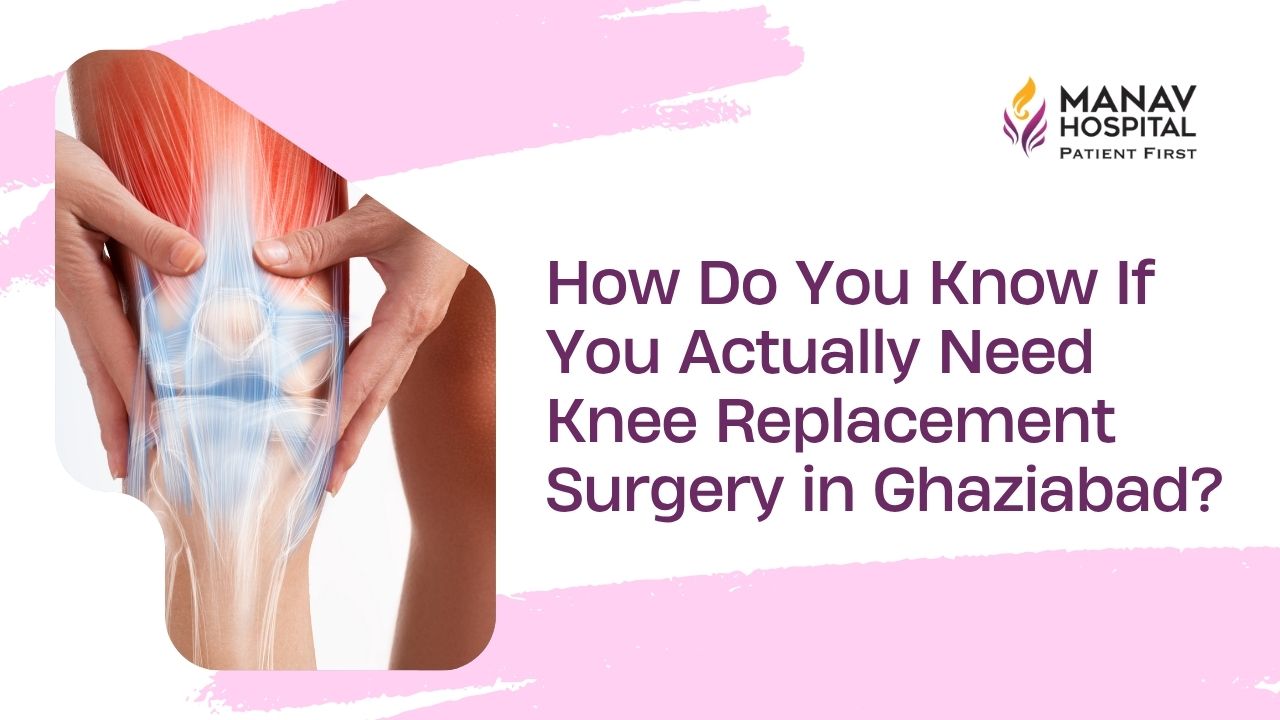
Knee replacement is one of the most commonly performed orthopaedic surgeries in India. It is also one of the most commonly recommended surgeries before every other option has genuinely been tried.
Most people who end up in a surgeon’s office have one overriding question: is this actually necessary right now, or is there something else worth trying first?
The honest answer depends on several factors that only a proper clinical assessment can determine. At Manav Hospital in Ghaziabad, Dr Sharad Gupta takes a conservative approach to surgical recommendations, meaning replacement is advised when it is genuinely the best option rather than the first convenient one.
What Conditions Lead to Knee Replacement?
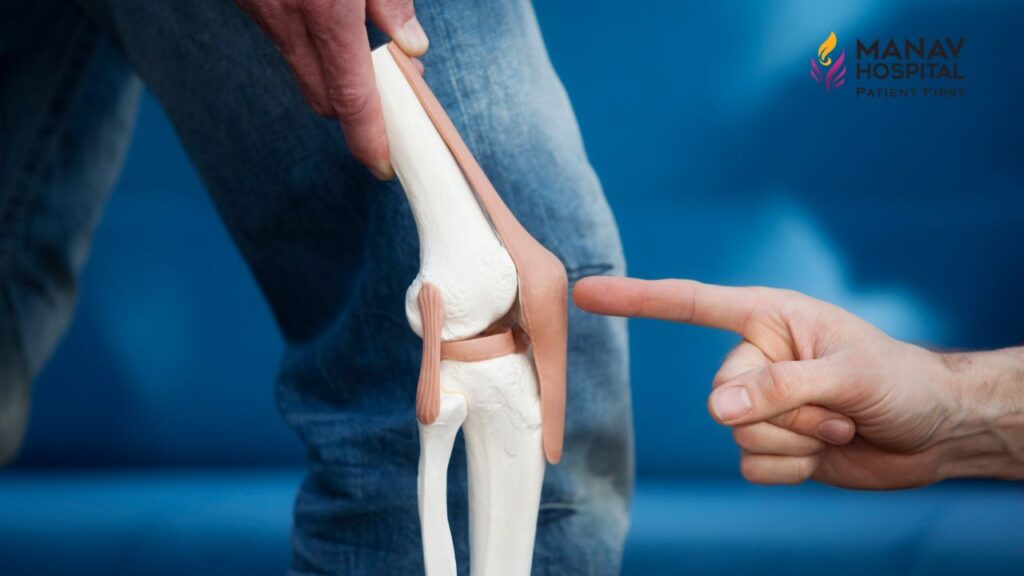
Knee replacement addresses structural damage to the knee joint that has progressed beyond what other treatments can meaningfully manage. The most common underlying conditions are:
• Osteoarthritis — progressive breakdown of cartilage in the knee joint
• Rheumatoid arthritis — joint inflammation and destruction
• Post-traumatic arthritis — develops after a significant knee injury
• Avascular necrosis of the knee — the bone loses blood supply and collapses
The presence of one of these conditions does not automatically mean replacement is needed. The severity, how much daily function is affected, and what has already been tried all factor into the decision.
What Should Be Tried Before Knee Replacement?
Non-surgical options that should be genuinely explored first include:
• Weight management to reduce load on the knee joint
• Physiotherapy to strengthen muscles supporting the knee
• Anti-inflammatory medications and pain management
• Corticosteroid injections for acute flare-ups
• Hyaluronic acid injections to lubricate the joint
• Bracing and activity modification
These do not cure structural damage. But they can manage symptoms effectively enough that surgery can be deferred — sometimes for years.
When Is Knee Replacement Actually the Right Answer?
There are clear indicators that surgery has become the most appropriate option:
• Knee pain is constant and significantly affects sleep and daily activity
• Pain has not responded to multiple rounds of non-surgical treatment
• X-rays show severe cartilage loss with bone-on-bone contact
• The knee has developed a visible deformity
• Walking is limited to short distances, even with pain management
• Quality of life has deteriorated significantly because of the knee
When most of these apply, the benefit of surgery outweighs the alternative. Continuing to manage with medications and injections at that stage delays relief without changing the eventual outcome.
What Type of Knee Replacement Is Right?
Not all knee replacements are the same procedure.
Total Knee Replacement
Replaces all three compartments of the knee joint. Appropriate when damage is widespread across the joint.
Partial Knee Replacement
Replaces only the damaged compartment, preserving healthy bone and tissue in the rest of the joint. Recovery is typically faster, and the result often feels more natural.
Robotic-Assisted Knee Replacement
Available at Manav Hospital, this adds a layer of precision to either total or partial replacement that conventional techniques cannot match. The right approach is determined after a full assessment of knee imaging and clinical findings.
What Does Recovery Actually Look Like?
Most patients underestimate how active the recovery process is. It is not rest and waiting — it is physiotherapy, progressive movement, and consistent effort over several months.
Key recovery milestones:
• Walking with support within 24 to 48 hours of surgery
• Return to light daily activity within 6 to 8 weeks
• Driving typically resumed at 6 to 8 weeks
• Full functional recovery and maximum benefit at 3 to 6 months
Physiotherapy at Manav Hospital begins almost immediately after surgery and continues as a structured programme through recovery.
Conclusion
Knee replacement is genuinely life-changing for patients who need it. The question worth asking before agreeing to surgery is whether you are actually at that point. A thorough consultation that looks at what has been tried, what the imaging shows, and what your daily life actually looks like is the only honest way to answer that question.
Book an Eye Consultation at Manav Hospital, Ghaziabad
Frequently Asked Questions
Q. At what stage of arthritis is knee replacement recommended in Ghaziabad?
Severe arthritis with significant cartilage loss, bone-on-bone contact, persistent pain, and functional limitation that has not responded to conservative treatment is typically when replacement is recommended.
Q. Can knee replacement be avoided entirely?
For some patients with mild to moderate arthritis, symptoms can be managed long-term without surgery. For patients with severe structural damage, surgery eventually becomes the most appropriate option. The timeline varies significantly between individuals.
Q. How long does knee replacement surgery take at Manav Hospital?
The procedure takes between 1.5 and 2 hours. Hospital stay is typically 3 to 5 days before discharge.
Q. What is the success rate of knee replacement surgery?
Total knee replacement has one of the highest satisfaction rates of any elective surgery. Over 90 per cent of patients report significant pain reduction and improved function.