Overview
Chronic knee pain caused by arthritis, joint degeneration, or injury can severely limit mobility and independence. With advancements in orthopaedic technology, robotic knee replacement surgery has emerged as a highly precise and patient-focused solution for individuals suffering from severe knee joint damage. At Manav Hospital Ghaziabad, robotic-assisted knee replacement is performed using advanced systems that enhance surgical accuracy, improve outcomes, and support faster recovery.
This article explains what robotic knee replacement surgery is, how it works, and who can benefit most from this advanced procedure.

What is Robotic Knee Replacement Surgery?
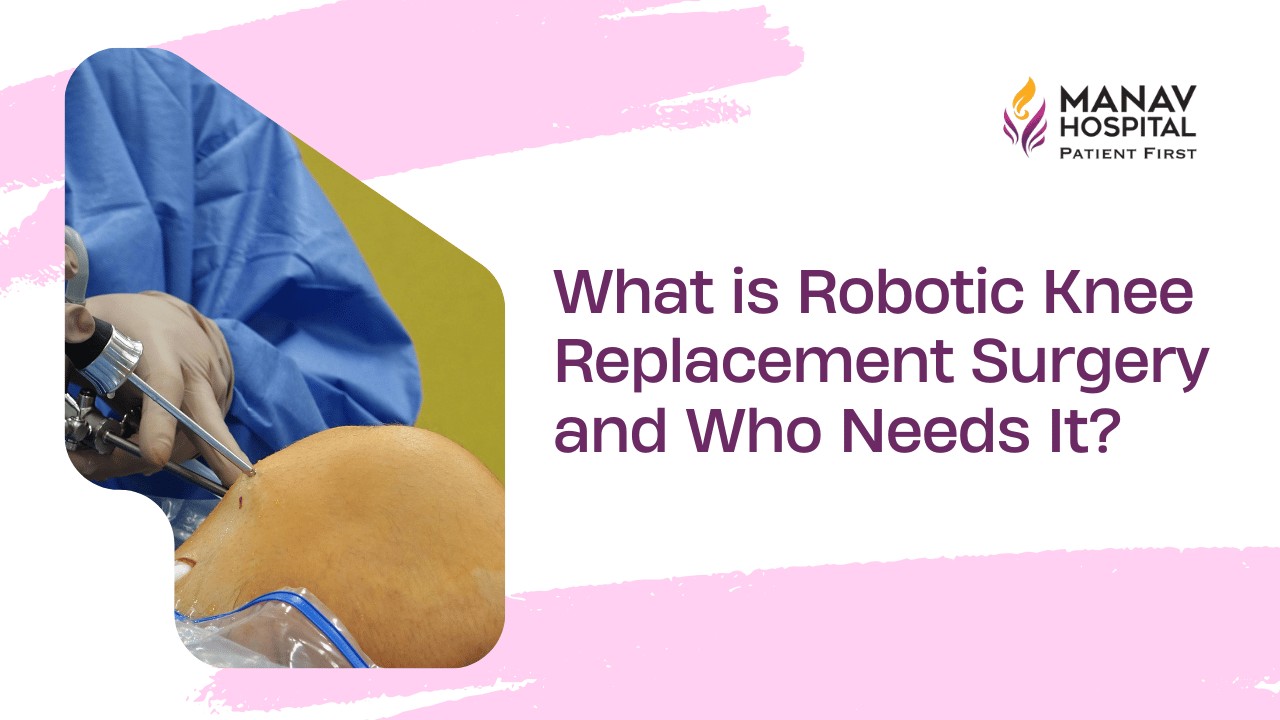
Robotic knee replacement surgery is an advanced form of knee arthroplasty where surgeons use computer-assisted robotic technology to plan and perform the procedure with exceptional precision. Unlike traditional knee replacement, robotic systems assist the surgeon in mapping the patient’s unique knee anatomy before and during surgery.
At Manav Hospital, robotic technology is used as a surgical support tool, not as a replacement for the surgeon’s expertise. The orthopaedic surgeon remains in full control while the robotic system enhances accuracy at every stage.
How Robotic Knee Replacement Surgery Works
Robotic knee replacement follows a structured and highly controlled process:
1. Pre-Surgical Planning
- Advanced imaging (CT scans or digital mapping) creates a 3D model of the knee
- The surgeon plans implant size, positioning, and alignment in advance
- Personalized planning reduces intraoperative guesswork
2. Intraoperative Precision
- The robotic system provides real-time feedback
- Surgeons perform bone preparation with sub-millimeter accuracy
- Healthy tissue and ligaments are preserved
3. Accurate Implant Placement
- Robotic guidance ensures optimal implant alignment
- Balanced joint movement is achieved
- Improves implant longevity and knee function
This level of precision is difficult to achieve consistently with conventional techniques.
Key Benefits of Robotic Knee Replacement Surgery
1. Enhanced Surgical Accuracy
Robotic assistance allows exact bone cuts and precise implant positioning, significantly reducing alignment errors.
2. Personalized Knee Replacement
Every knee is different. Robotic systems adapt the surgical plan to the patient’s anatomy, weight distribution, and movement pattern.
3. Reduced Post-Surgical Pain
- Smaller incisions
- Less muscle and tissue trauma
- Lower inflammation after surgery
4. Faster Recovery and Rehabilitation
Patients often:
- Start walking within 24 hours
- Experience shorter hospital stays
- Return to daily activities sooner
5. Improved Long-Term Outcomes
Accurate implant placement leads to:
- Better joint stability
- More natural knee movement
- Longer implant lifespan (15–20 years or more)
Who Needs Robotic Knee Replacement Surgery?
Robotic knee replacement surgery is recommended for patients with moderate to severe knee joint damage who have not responded to conservative treatments.
You may be an ideal candidate if you experience:
- Chronic knee pain that limits daily activities
- Severe osteoarthritis or rheumatoid arthritis
- Knee stiffness or deformity
- Pain even during rest or sleep
- Reduced knee mobility despite medication or physiotherapy
At Manav Hospital, orthopaedic specialists carefully evaluate each patient to determine whether robotic knee replacement is appropriate based on clinical findings and lifestyle needs.
Who May Not Require Robotic Knee Replacement?
Robotic knee replacement may not be necessary for:
- Early-stage arthritis
- Mild knee pain manageable with non-surgical treatment
- Patients not medically fit for surgery
In such cases, alternative treatments like physiotherapy, injections, or partial knee replacement may be advised.
Robotic vs Traditional Knee Replacement Surgery
| Aspect | Robotic Knee Replacement | Traditional Knee Replacement |
|---|---|---|
| Surgical Precision | Very High | Surgeon-dependent |
| Implant Alignment | Personalized & accurate | Standard alignment |
| Tissue Preservation | Better | Less controlled |
| Recovery Time | Faster | Longer |
| Long-Term Outcomes | Improved | Variable |
Robotic knee replacement represents a major advancement in orthopaedic surgery by combining technology with surgical expertise.
Why Choose Manav Hospital for Robotic Knee Replacement Surgery?
1. Experienced orthopaedic Surgeons
Manav Hospital is home to highly skilled knee replacement specialists with extensive experience in both conventional and robotic-assisted surgeries.
2. Advanced Technology
The hospital uses modern robotic systems, digital imaging, and navigation tools to ensure precision-driven care.
3. Comprehensive orthopaedic Care
From diagnosis to post-operative rehabilitation, patients receive complete care under one roof.
4. State-of-the-Art Infrastructure
- Modern operation theatres
- Advanced sterilization and infection control
- Dedicated physiotherapy and rehabilitation unit
5. Patient-Centric Treatment Approach
Each patient receives a personalized treatment plan based on medical condition, age, activity level, and recovery goals.
Recovery After Robotic Knee Replacement Surgery
Post-operative care plays a vital role in success. At Manav Hospital, recovery includes:
- Early mobilization within 24 hours
- Structured physiotherapy programs
- Pain management protocols
- Regular follow-up assessments
Most patients resume normal daily activities within 4–6 weeks, with full functional recovery over a few months.
Safety and Success Rate
Robotic knee replacement surgery has a high success rate when performed by experienced surgeons in advanced facilities. The use of robotic technology minimizes surgical errors and improves patient satisfaction.
At Manav Hospital, strict clinical protocols and continuous monitoring ensure optimal safety and outcomes.

Conclusion
Robotic knee replacement surgery represents the future of orthopaedic care, offering unmatched precision, faster recovery, and improved long-term results. By combining advanced robotic technology with experienced orthopaedic expertise, Manav Hospital Ghaziabad delivers reliable, patient-focused knee replacement solutions.
If knee pain is affecting your mobility and quality of life, robotic knee replacement surgery may be the right step toward lasting relief and restored independence. A detailed evaluation by Manav Hospital’s orthopaedic specialists can help determine the best treatment approach for your condition.
FAQs
1. Is robotic knee replacement surgery safe?
Ans. Yes, it is a safe and well-established procedure when performed by trained orthopaedic surgeons using advanced systems.
2. Does the robot perform the surgery?
Ans. No. The surgeon performs the surgery. The robotic system only assists by providing precision and real-time guidance.
3. How long does robotic knee replacement surgery take?
Ans. The procedure usually takes 1–2 hours, depending on the complexity of the case.
4. Is recovery faster than traditional knee replacement?
Ans. Yes, patients typically experience less pain and faster recovery due to minimal tissue damage.
5. How long does a robotic knee implant last?
Ans. With proper care, modern implants can last 15–20 years or longer.