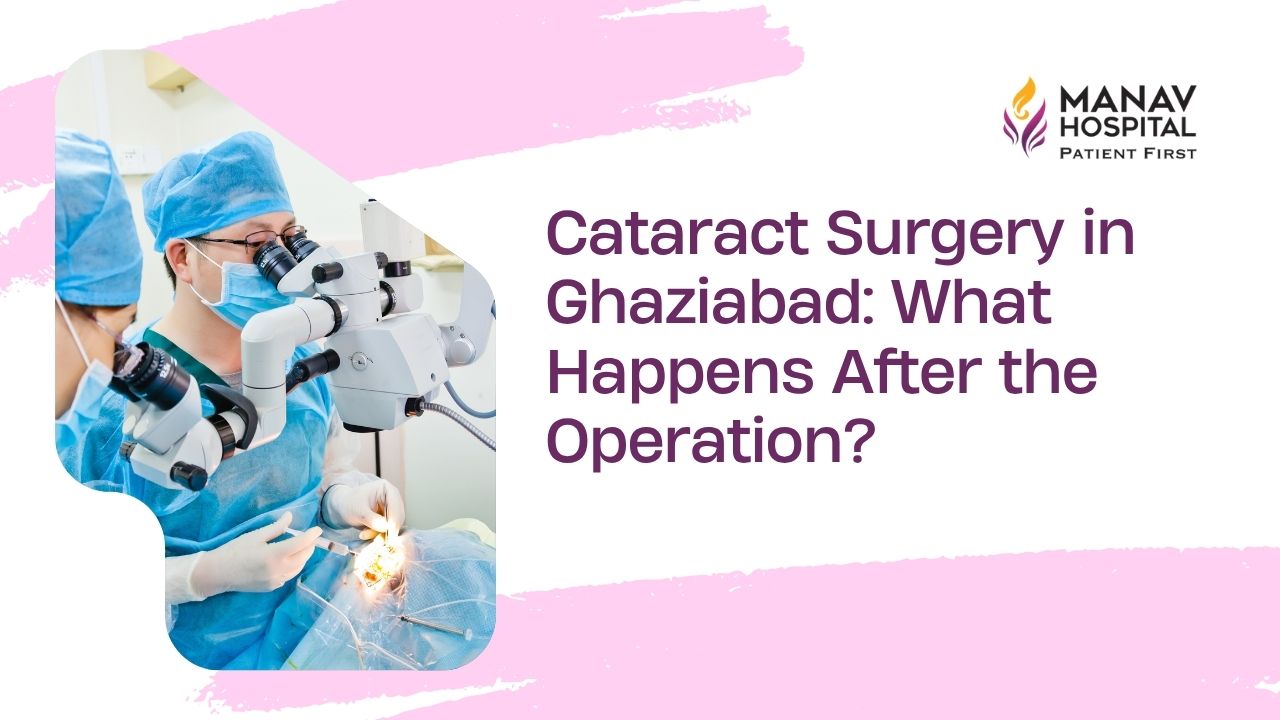
Cataract Surgery Ghaziabad is often discussed as a simple procedure, but most patients still want to know what actually happens after the operation. Will vision become clear immediately? Will the eye feel uncomfortable? How long does recovery take? These are practical concerns, and knowing the answers before surgery makes the experience much less stressful.
A cataract develops when the natural lens inside the eye becomes cloudy. This makes vision look blurred, dull, or washed out. Reading becomes harder, colours lose brightness, and glare from sunlight or headlights can become uncomfortable. Because cataracts usually progress slowly, many people adjust without realising how much their vision has changed.
At Manav Hospital’s ophthalmology department, cataract evaluation and surgery are planned after a complete eye assessment. The hospital’s eye care services include cataract, retina, glaucoma, cornea, paediatric ophthalmology and other advanced eye treatments, helping patients receive complete care under one roof.
What a Cataract Does to Your Vision
A healthy lens allows light to pass clearly and focus on the retina. When a cataract forms, that lens becomes cloudy and scatters light. This is why patients often describe cataract vision as looking through dirty glass. The problem is not simply weak eyesight. It is a structural clouding inside the eye, which is why changing glasses may stop helping after a point.
Common symptoms include blurred vision, glare, halos around lights, reduced contrast, frequent changes in spectacle power, difficulty reading, and poor night driving confidence. A proper eye examination helps confirm whether cataract is the main cause or whether another condition is also affecting vision.
How Cataract Surgery Works
During cataract surgery, the cloudy natural lens is removed and replaced with an artificial intraocular lens, also called an IOL. At Manav Hospital, patients looking for the Best Cataract Surgery Hospital in Ghaziabad can discuss phacoemulsification, lens options, and expected visual outcomes before the procedure.
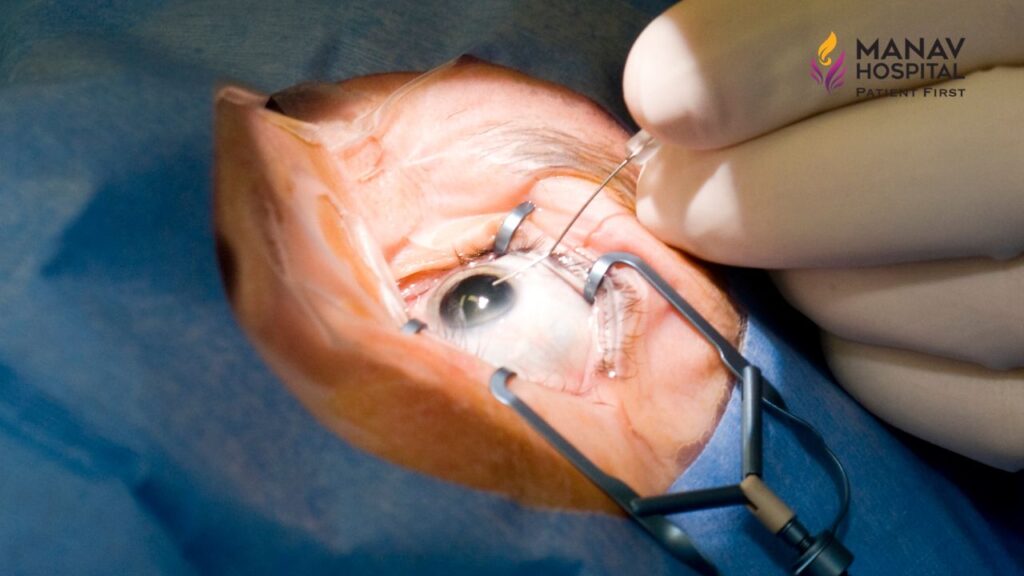
Phacoemulsification uses ultrasound energy to break the cloudy lens into tiny fragments. These fragments are gently removed, and the new IOL is placed inside the eye. The incision is small, stitches are usually not required, and the procedure is commonly completed in 15 to 30 minutes per eye under local anaesthesia.
Lens Options Matter
The lens selected before surgery affects how vision feels afterwards. Monofocal lenses generally correct one distance, often distance vision, while glasses may still be needed for reading. Multifocal or extended-depth-of-focus lenses may reduce dependence on glasses at more than one distance. The best choice depends on lifestyle, eye health, budget, and whether the retina and optic nerve are healthy.
What Happens in the First 48 Hours After Surgery
Many patients expect perfect vision immediately, but the first 24 to 48 hours can feel slightly different. Vision may be cloudy, yellowish, bluish, or mildly hazy while the eye adjusts to the new lens. Mild watering, light sensitivity, grittiness, and redness are also common during the first day or two.
These symptoms usually reduce quickly with prescribed eye drops and rest. However, severe pain, sudden vision loss, increasing redness, or discharge should be reported to the hospital immediately. These are uncommon but should never be ignored.
Recovery During the First Few Weeks
Vision generally improves significantly during the first week and continues stabilising over the next four to six weeks. During this period, patients must use prescribed eye drops regularly, avoid rubbing the eye, stay away from dusty or smoky environments, and avoid swimming until advised by the surgeon.
Reading and screen time are usually allowed after a short period, but breaks are important if the eyes feel tired. Driving should only resume once the surgeon confirms that vision is safe enough during follow-up.
Cataract Surgery and Other Eye Conditions
Cataract surgery improves clouding caused by cataract, but it does not cure every eye condition. If glaucoma, diabetic retinopathy, macular degeneration, or another retinal condition is present, those problems still need separate management.
This is why a full pre-surgery evaluation is important. Patients who also need Best Retina Surgery in Ghaziabad or care at the Best Glaucoma Treatment Hospital in Ghaziabad can be evaluated within the same eye care ecosystem at Manav Hospital.
When Should You Get a Cataract Checked?
· Reading, stitching, phone use, or close work has become harder.
· Night driving feels unsafe because of glare or halos.
· Your glasses prescription keeps changing without real improvement.
· One eye feels noticeably weaker than the other.
· Vision is limiting work, travel, walking, or daily activities.
Conclusion
Cataract surgery can dramatically improve quality of life when performed at the right time with the right lens planning. The key is not only removing the cataract but also understanding recovery, lens choices, and any other eye conditions that may affect the final result.
For evaluation, lens planning, and recovery guidance, book an eye consultation at Manav Hospital, Ghaziabad.
FAQs
Q. How long does cataract surgery take at Manav Hospital in Ghaziabad?
The procedure usually takes around 15 to 30 minutes per eye. Patients may spend a few hours at the hospital for preparation, surgery, and observation before going home.
Q. Is cataract surgery painful?
No. Local anaesthesia is used, so patients usually do not feel pain during surgery. Mild grittiness or discomfort for a day or two after surgery is common.
Q. Will I need glasses after cataract surgery?
It depends on the lens selected. Monofocal lenses may still require reading glasses, while premium lenses may reduce dependence on glasses at multiple distances.
Q. Can cataract surgery fix glaucoma or retinal disease?
No. Cataract surgery removes lens clouding. Glaucoma and retinal conditions require separate diagnosis and treatment.