

Overview
Patients researching knee replacement usually spend hours comparing surgeons and almost no time asking what the hospital itself is equipped to handle. Before finalising a decision, it’s worth consulting an orthopaedic surgeon for knee replacement in Ghaziabad about the facility standing behind the surgery, not just the surgeon’s résumé. Dr. Sharad Gupta, associated with Manav Hospital, leads a department built around exactly this kind of infrastructure, with over two decades of orthopaedic experience behind it.
What Does a Knee Replacement Surgeon Do?
Beyond the operating theatre, a knee surgeon shapes every part of the surrounding system.
Core responsibilities include:
• Diagnosing the extent of joint damage through imaging
• Deciding between traditional and robotic-assisted techniques
• Coordinating with anaesthesia and nursing teams for a safe procedure
• Overseeing infection-control protocols in the operating theatre
• Directing post-operative physiotherapy and discharge planning
A surgeon’s skill only translates into good outcomes when the hospital around them is equally prepared.
Meet Dr. Sharad Gupta – Trusted Name in Knee Replacement Surgery
Patients want a surgeon with real surgical volume and a hospital that backs that skill with proper systems. Dr. Sharad Gupta has built both at Manav Hospital.
Professional Highlights:
• Over 20 years in orthopaedic and joint replacement surgery
• Hundreds of knee replacement procedures, including robotic-assisted cases
• Fellowship training in Arthroplasty and revision surgery
• Focus on both traditional and minimally invasive knee techniques
• Reputation for direct, no-nonsense patient communication
Dr. Gupta combines robotic navigation technology with hands-on surgical judgement, which patients say makes the difference between a generic treatment plan and one built around their actual knee.
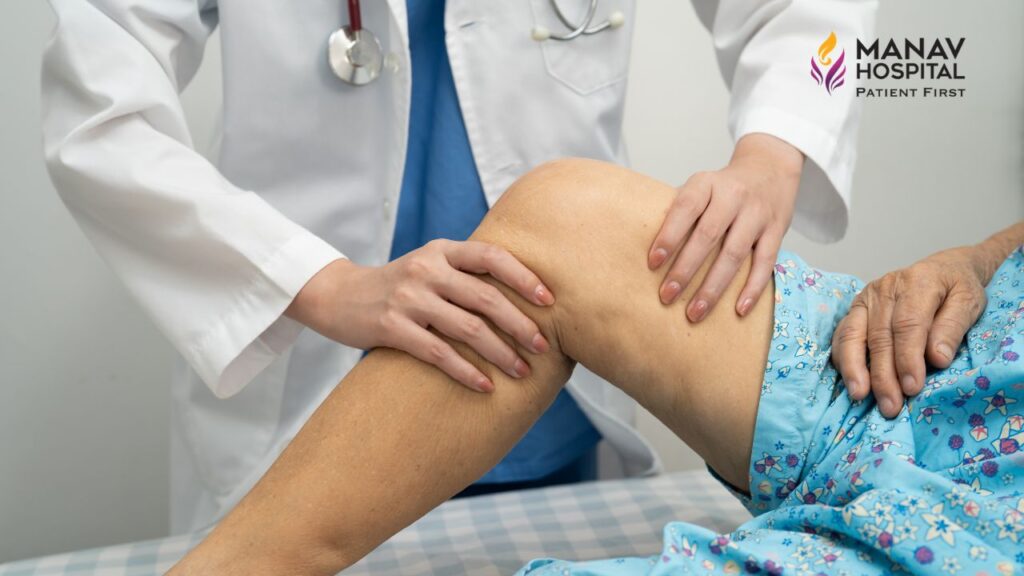
Advanced Knee Replacement Options Offered
1. Total Knee Replacement
Full joint resurfacing for advanced osteoarthritis or severe joint damage.
2. Robotic-Assisted Knee Replacement
Computer-guided implant placement for greater precision, offering:
• More consistent implant alignment
• Reduced soft tissue disruption
• Potential for a smoother early recovery
• Detailed pre-surgical joint mapping
3. Partial Knee Replacement
For damage limited to one compartment of the joint.
4. Revision Knee Surgery
For patients whose earlier implant has failed or loosened over time.
Why Choose Manav Hospital for Knee Replacement in Ghaziabad?
A modular operation theatre and a skilled surgeon mean little without the systems around them.
Key advantages:
• Dedicated orthopaedic operation theatre with controlled airflow
• ICU backup available on the same premises
• Round-the-clock in-house pharmacy and blood availability
• Structured, on-site physiotherapy from day one
• Trained nursing staff on every shift, including overnight
Facility gaps rarely show up until something goes wrong, which is exactly why they’re worth checking before surgery, not after.
Signs You May Need Knee Replacement
Consult an orthopaedic surgeon if you experience:
• Knee pain that worsens with weight-bearing activity
• Stiffness that limits bending or straightening the knee
• Swelling that doesn’t settle with rest
• A grinding or catching sensation in the joint
• Reduced mobility affecting daily tasks like stairs
• Pain that disrupts sleep
Dr. Sharad Gupta evaluates each case individually before recommending surgery over continued conservative care.
Step-by-Step Knee Replacement Journey
1. Initial Consultation
Imaging and a physical exam confirm the extent of joint damage.
2. Pre-Surgical Planning
Bloodwork, anaesthesia review, and implant selection are finalised.
3. The Surgery
The damaged joint surface is resurfaced with an implant matched to the patient’s anatomy.
4. Early Mobilisation
Physiotherapists guide the first steps, often within a day of surgery.
5. Structured Rehabilitation
Ongoing physiotherapy rebuilds strength and range of motion over several weeks.
Benefits of Knee Replacement
With Dr. Sharad Gupta’s approach, patients typically see:
• ✔ Substantial reduction in chronic knee pain
• ✔ Restored ability to walk, climb stairs, and stand for longer
• ✔ Better sleep once joint pain stops disrupting it
• ✔ Long-lasting implants with proper care
• ✔ A faster return to independent daily activity
Outcomes for well-performed knee replacement remain excellent for the vast majority of patients.
Recovery and Rehabilitation: The Key to Success
Recovery is a continuous process that starts the moment surgery ends, not a single event.
Post-surgery care includes:
• A physiotherapist-supervised first walk within 24 hours
• Scheduled pain management through the first two days
• Wound monitoring for infection or swelling
• A written discharge and home-care plan
• Regular follow-up visits to track progress
Most patients regain independent mobility within 6 weeks, with fuller recovery continuing over 3 to 6 months.
Why Ghaziabad is a Preferred Destination for Knee Replacement
• Experienced orthopaedic surgeons with high case volumes
• Robotic and traditional surgical options under one roof
• ICU-backed, infection-controlled operating theatres
• More cost-effective than many metro alternatives
• Established physiotherapy infrastructure for full recovery
Conclusion
A hospital’s infrastructure matters just as much as the surgeon’s skill when it comes to knee replacement. Dr. Sharad Gupta and Manav Hospital’s orthopaedic department have built both, backed by ICU support, in-house diagnostics, and structured rehabilitation.
That combination is what allows precision surgery to translate into a safe, well-supported recovery.
Take the first step toward better mobility and book a consultation here.
FAQ SECTION (SEO + SCHEMA READY)
Frequently Asked Questions
Who is the best orthopaedic surgeon for knee replacement in Ghaziabad?
Dr. Sharad Gupta, associated with Manav Hospital, is a leading name in knee replacement surgery in Ghaziabad. Follow patient updates on Instagram.
When should I consider knee replacement?
When pain, stiffness, or swelling persist despite conservative treatment, and imaging confirms significant joint damage.
Is robotic knee replacement better than traditional surgery?
It offers greater precision for many patients, but bone quality and joint condition determine whether it’s the right fit.
How long does hospital stay and recovery take?
Most patients stay 3 to 5 days and regain independent mobility within about 6 weeks.
Does hospital infrastructure really affect outcomes?
Yes. Infection control, ICU readiness, and physiotherapy quality all influence recovery speed and complication rates.