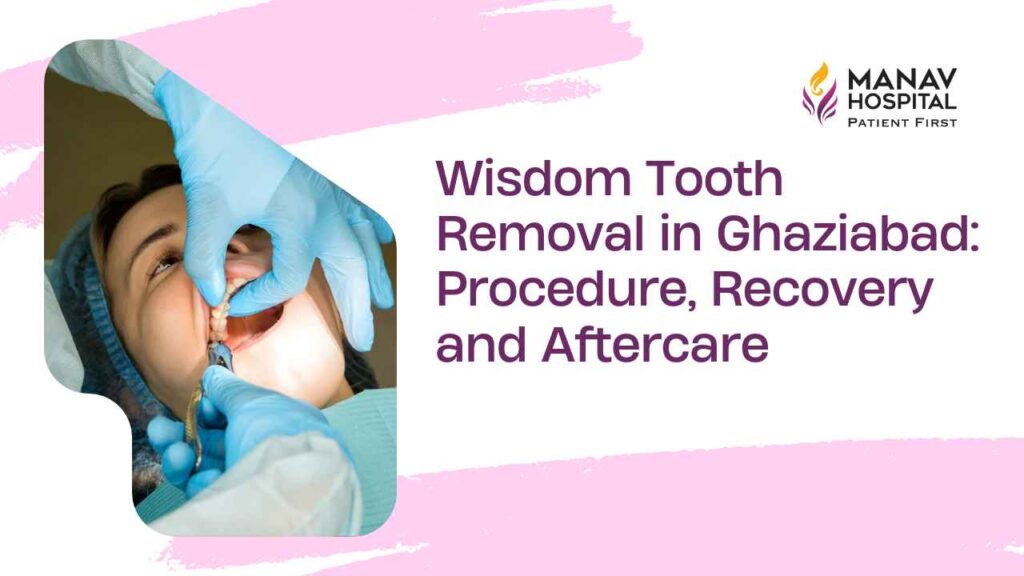
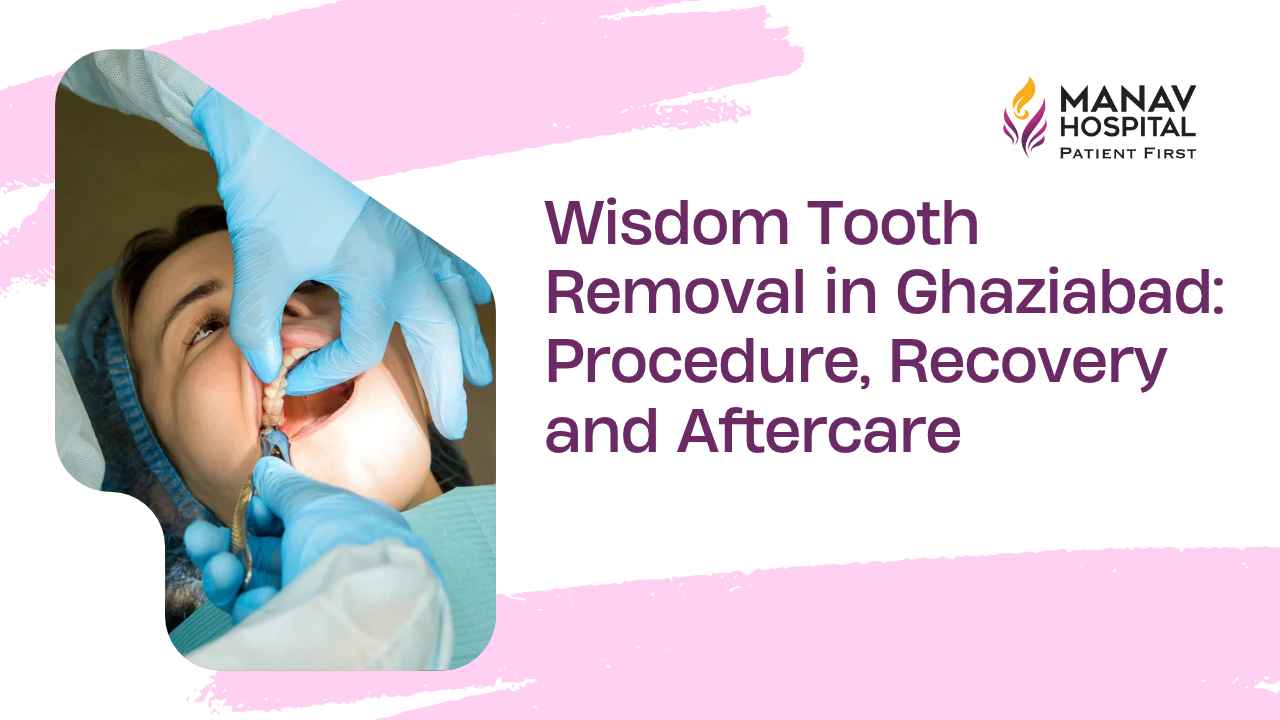
Wisdom tooth removal is a dental procedure in which one or more third molars are taken out, usually because they are impacted, painful, infected or damaging the neighbouring teeth. It is commonly done under local anaesthesia, and the dentist or oral surgeon decides the method after an examination and an X-ray. Most of the early recovery depends on aftercare, such as protecting the blood clot, eating soft food and keeping the mouth clean.
Overview
Wisdom teeth have a reputation for arriving late and causing trouble. Most people get them between the ages of 17 and 25. Some never develop them at all. For others, the tooth has no room to come out properly, and the result is swelling, a dull ache at the back of the jaw or food that keeps getting stuck. If you have been told you need an extraction, or you are wondering whether to wait, you can book a dental appointment at Manav Hospital.
Manav Hospital in Kavi Nagar, Ghaziabad, offers dental care that includes wisdom tooth removal, implants, root canal treatment and cosmetic dentistry. This guide explains why wisdom teeth are removed, what the procedure involves and how to recover well. If your main question is about discomfort, our post on whether it is normal for wisdom teeth to hurt is a good companion read.
What Is Wisdom Tooth Removal?
In simple words
● A procedure to take out a third molar, the last teeth at the back of the mouth
● Done when the tooth is causing problems or is likely to do so
● Can be a simple extraction or a minor surgical procedure
● Planned after an examination and an X-ray
A wisdom tooth is removed when keeping it causes more trouble than taking it out.
Meet Dr. Kanika Gupta
Dr. Kanika Gupta is a Consultant Dental Surgeon and Implantologist at Manav Hospital, Ghaziabad. Her listed qualifications include BDS and MDS from Subharti Dental College, Meerut, and she is a life member of the Indian Society of Oral Implantologists (ISOI). She is described on the hospital’s website as the principal oral surgeon and head implantologist, and her areas of work include root canal treatment, implant rehabilitation, smile design and orofacial care.
Professional Highlights
● Consultant Dental Surgeon and Implantologist at Manav Hospital
● BDS and MDS from Subharti Dental College, Meerut
● Life member of the Indian Society of Oral Implantologists
● Works in rotary endodontics, implant rehabilitation and smile design
See dental tips on the hospital’s YouTube channel, or call +91 97189 42666 to ask about an appointment.
When Do Wisdom Teeth Need to Be Removed?
Not every wisdom tooth needs to come out. But some situations make removal a sensible choice.
1. Impacted Wisdom Teeth
When there is no space, the tooth may emerge only partly, or not at all. It may tilt toward the next tooth, lean backward toward the gum or lie sideways in the jaw.
2. Repeated Gum Infection
A partly erupted tooth can trap food and bacteria, leading to swollen, painful gums around it.
3. Damage to the Neighbouring Tooth
A tilted wisdom tooth can press on the second molar, causing decay or damage.
4. Decay That Cannot Be Fixed Easily
Because wisdom teeth sit at the very back, they are hard to clean, and cavities can form. If the tooth cannot be restored properly, removal may be advised.
5. Crowding or Planned Orthodontic Treatment
In some cases, the dentist may advise removal as part of a plan for braces or aligners. You can read about braces versus aligners if this applies to you.
6. Pain With No Other Cause
Persistent pain at the back of the jaw, often with swelling or difficulty opening the mouth, deserves a proper check.
Some dentists and oral surgeons may recommend removal even without symptoms, if they expect future problems.
What Happens During the Procedure?
Every case is different, but the general pattern is simple.
A typical sequence
● Examination and X-ray: The dentist checks the position of the tooth and its roots.
● Numbing: The area is numbed with local anaesthesia, so you should not feel pain during the procedure. You may feel pressure.
● Removal: A simple extraction loosens and lifts the tooth. If the tooth is impacted, a small cut in the gum may be needed, and the tooth may be removed in pieces.
● Cleaning and closing: The area is cleaned, and stitches may be placed if needed.
● Gauze and instructions: You bite on gauze to control bleeding and receive written or verbal aftercare advice.
Your dentist will tell you what applies to your tooth. Ask about the method, the expected time and what you should do before the visit.
Why Choose Manav Hospital for Wisdom Tooth Removal?
Key advantages
● A dental team led by a consultant dental surgeon and implantologist
● A hospital setting with other departments close by
● Planning based on examination and X-ray, not guesswork
● Dental services that also include root canal, implants and orthodontics
● A convenient location in Kavi Nagar, Ghaziabad
Follow the hospital on LinkedIn, or book your dental consultation here.
Signs You Should Get Your Wisdom Teeth Checked
● Pain or tenderness at the back of the jaw
● Swollen or red gums behind the last molar
● Bad taste or bad breath that does not go away
● Difficulty opening your mouth fully
● Food repeatedly trapped at the back
● Pain or decay in the tooth next to the wisdom tooth

What Is the Wisdom Tooth Removal Journey?
- Consultation: Your symptoms and dental history are discussed.
- X-ray and examination: The position of the tooth and its roots is assessed.
- Treatment plan: You are told whether removal is needed and how it will be done.
- Removal: The procedure is done after numbing the area.
- Aftercare and review: You receive instructions, and a follow-up visit is arranged if required.
What Are the Benefits of Timely Removal?
✔ Relief from repeated pain and swelling
✔ Protection of the neighbouring tooth
✔ Easier cleaning of the back of the mouth
✔ Fewer repeated gum infections
✔ A clear plan before problems get worse
What Should Recovery and Aftercare Look Like?
Recovery after wisdom tooth removal is different for each person. A simple extraction usually heals faster than a surgical one. Some swelling, mild discomfort and slight bleeding in the first day or two are common, and your dentist will tell you what to expect.
Simple aftercare guidelines
● Bite gently on the gauze for as long as you are told
● Do not spit forcefully, use a straw or touch the area with your tongue, as this can disturb the blood clot
● Eat soft, cool or lukewarm foods at first, and avoid very hot, hard or spicy items
● Take medicines exactly as prescribed
● Use a cold pack on the cheek in the first day if advised
● Start gentle rinsing only when your dentist says it is safe
● Avoid smoking and alcohol during healing
● Brush other teeth carefully, and keep away from the wound area
Call your dentist if you notice
● Bleeding that does not stop
● Severe pain that increases after the first few days, which may signal a dry socket
● Fever or spreading swelling
● A bad taste or pus from the area
● Difficulty swallowing or breathing
A calm first week usually means a smoother recovery.
Why Do Ghaziabad Patients Trust Manav Hospital?
● Dental treatment under a qualified consultant dental surgeon
● Clear advice on whether removal is really needed
● Patient information shared on Instagram and Facebook
● A hospital setting with other specialities available
● CGHS patients can also read about the hospital’s CGHS dental services
Conclusion
Wisdom tooth removal is a routine dental procedure, but it should be planned around your own mouth. Impacted teeth, repeated infections, damage to nearby teeth and persistent pain are common reasons for extraction. The procedure is usually done after numbing the area, and good aftercare in the first week makes a real difference to healing. If you are in Ghaziabad and suspect a problem with your wisdom teeth, the dental team at Manav Hospital can examine you and explain your options.
Contact Manav Hospital
Email: info.manavhospital@gmail.com
Phone: +91 97189 42666
Book your wisdom tooth consultation at Manav Hospital here
FAQs
When should a wisdom tooth be removed?
It is usually removed when it is impacted, causing repeated infection or pain, damaging a nearby tooth or cannot be cleaned or restored properly.
Is wisdom tooth removal painful?
The area is numbed first, so you should not feel pain during the procedure. Some soreness and swelling afterwards are common and can be managed with the advice and medicines your dentist gives.
How long does recovery take?
It varies. A simple extraction heals sooner than a surgical one, and your dentist will guide you on what to expect.
What should I avoid after wisdom tooth removal?
Avoid using a straw, spitting forcefully, smoking, alcohol and very hot or hard food in the early days.
Where can I get wisdom tooth removal in Ghaziabad?
You can book a dental consultation at Manav Hospital, Kavi Nagar, call +91 97189 42666 or write to info.manavhospital@gmail.com.