Overview
Most people with knee pain start the same way. Rest, some painkillers, maybe a hot water bag. If that does not help, they see a general physician. And if the general physician cannot sort it out, they eventually get referred somewhere else, weeks or months after the problem started.
That delay is not always necessary. There are specific signs that knee pain warrants a specialist assessment from the beginning, rather than going through several rounds of general treatment first. Knowing the difference can shorten the time between when a problem starts and when it actually gets properly addressed.
At Manav Hospital in Ghaziabad, the orthopaedics department is led by Dr Sharad Gupta, with additional orthopaedic surgeons on the team covering joint replacement, arthroscopy, fracture management, and sports-related knee injuries. This is a guide to understanding when a knee concern genuinely needs a specialist rather than continued general management.
What Does a Knee Orthopaedic Surgeon Actually Do Differently?
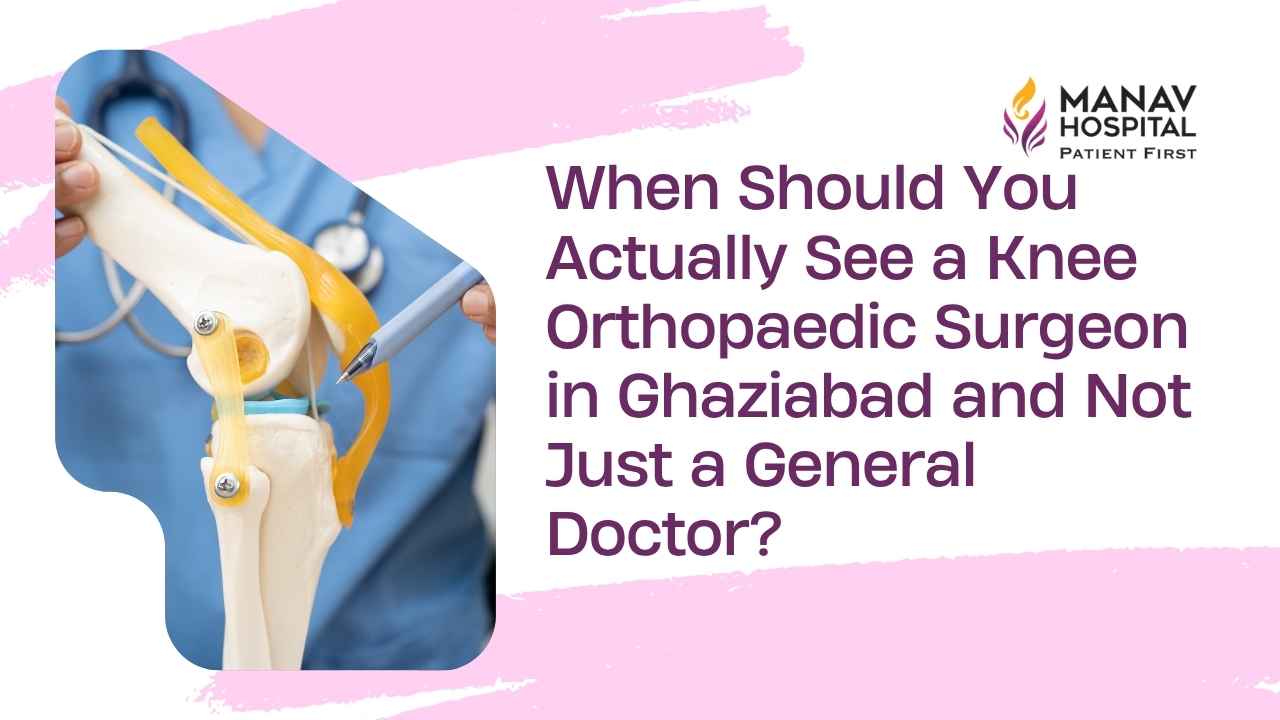
A general physician can manage pain and prescribe anti-inflammatories. What they are not set up to do is assess the structural integrity of the knee joint, interpret imaging in the context of surgical decision-making, or recommend procedures that address the underlying mechanical problem rather than just its symptoms.
A knee orthopaedic surgeon combines clinical assessment of the joint with imaging interpretation and the surgical training to address structural problems when that becomes necessary. The scope is broader and more specific at the same time, broader because it covers everything from early arthritis management to complex joint reconstruction, more specific because the focus is entirely on musculoskeletal conditions rather than general medicine.
At Manav Hospital’s orthopaedic department, the team covers the full range of knee conditions from conservative management through to total knee replacement, arthroscopic procedures, ACL reconstruction, and meniscus repair.
Signs That a Knee Orthopaedic Surgeon Is the Right First Call
The knee gave way during an activity. If the knee buckled, twisted suddenly, or gave way during sport or movement, and was accompanied by a pop or immediate swelling, this is a ligament injury until proven otherwise. Waiting for this to settle on its own is not the right approach. ACL tears and other ligament injuries need proper assessment and imaging, not rest and hope.
Swelling appeared quickly after an injury. Rapid swelling within hours of a knee injury usually means blood in the joint. This needs assessment rather than observation. Delayed or gradual swelling suggests a different type of injury but still warrants proper examination.
The knee locks or catches. If the knee gets stuck at a certain point of movement, or if you feel a catching sensation that is painful and reproducible, this suggests a mechanical problem inside the joint, commonly a meniscal tear or loose body. This does not resolve with rest and anti-inflammatories. It needs a surgical assessment.
Pain has been present for more than 6 weeks without improvement. Soft tissue injuries and minor strains typically improve meaningfully within 4 to 6 weeks with appropriate management. Pain that persists beyond this without a clear trajectory of improvement needs proper investigation.
You have been told you have arthritis, but the pain is not being controlled. A general physician can diagnose arthritis and manage it with medication. When pain is affecting sleep, limiting daily activity significantly, or when medications are no longer providing adequate relief, the conversation with a specialist about what the next options are is worth having sooner rather than later.
Pain after previous knee surgery. Any new or changing symptoms in a knee that has had previous surgery should be assessed by a specialist rather than managed expectantly.
What Does a Knee Specialist Assessment at Manav Hospital Involve?
The same assessment-first approach is used across Manav Hospital‘s other specialist departments, so any related concern can be reviewed during the same visit.
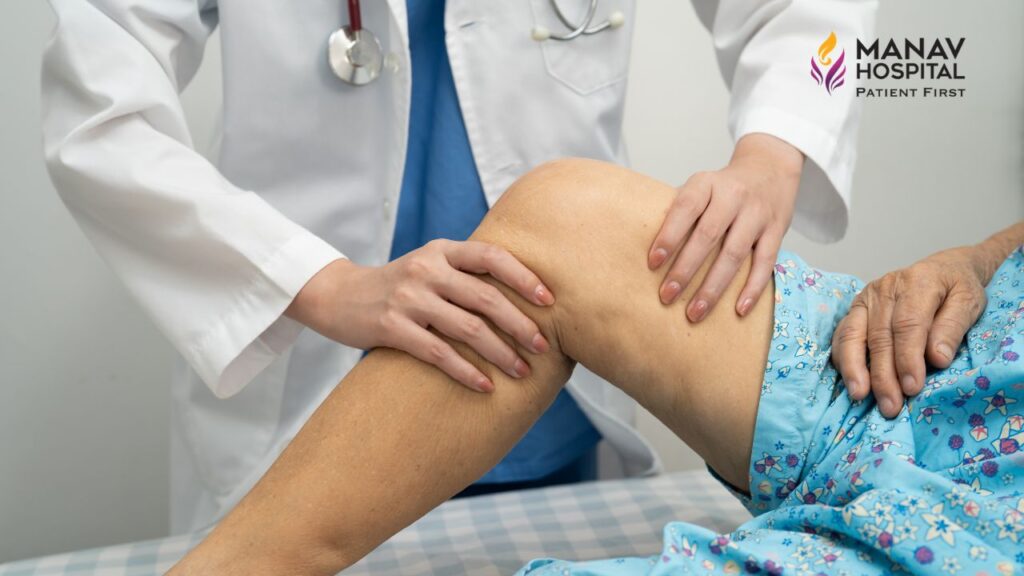
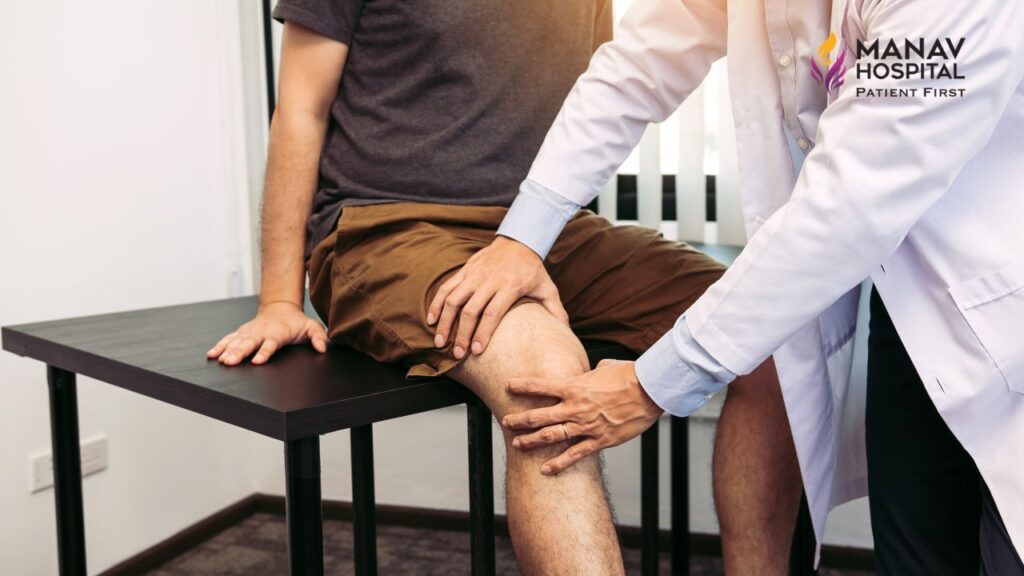
The assessment at Manav Hospital’s orthopaedic department is a proper clinical evaluation rather than a brief consultation. It includes examination of the knee’s range of motion, stability testing of the ligaments, assessment of the patella and soft tissues, and review of any imaging that exists. Where imaging has not been done, X-rays or MRI are arranged and interpreted in the context of the clinical findings.
The outcome of that assessment is a clear picture of what is actually happening in the knee, what has caused it, and what the options are. For many patients, that conversation confirms that surgery is not necessary and that a structured conservative plan will address the problem. For others, it confirms that a particular procedure would resolve something that conservative treatment cannot.
Either way, the patient leaves with more clarity than they had going in, which is the actual point of a specialist assessment.
When Is Surgery Not the Answer?
This is worth addressing because the assumption people sometimes have is that seeing a knee orthopaedic surgeon means surgery is being considered. It is not always.
Most knee conditions, particularly early to moderate arthritis, can be managed well without surgery for significant periods. Physiotherapy to strengthen the muscles around the joint, weight management to reduce load, appropriate anti-inflammatory management, and injection therapy for acute flare-ups are all within the non-surgical toolkit.
At Manav Hospital, physiotherapy is integrated into the orthopaedic care pathway. Patients who do not need surgical intervention are directed toward appropriate conservative management, with the orthopaedic team available for reassessment if things change.
What About Fractures and Complex Injuries?
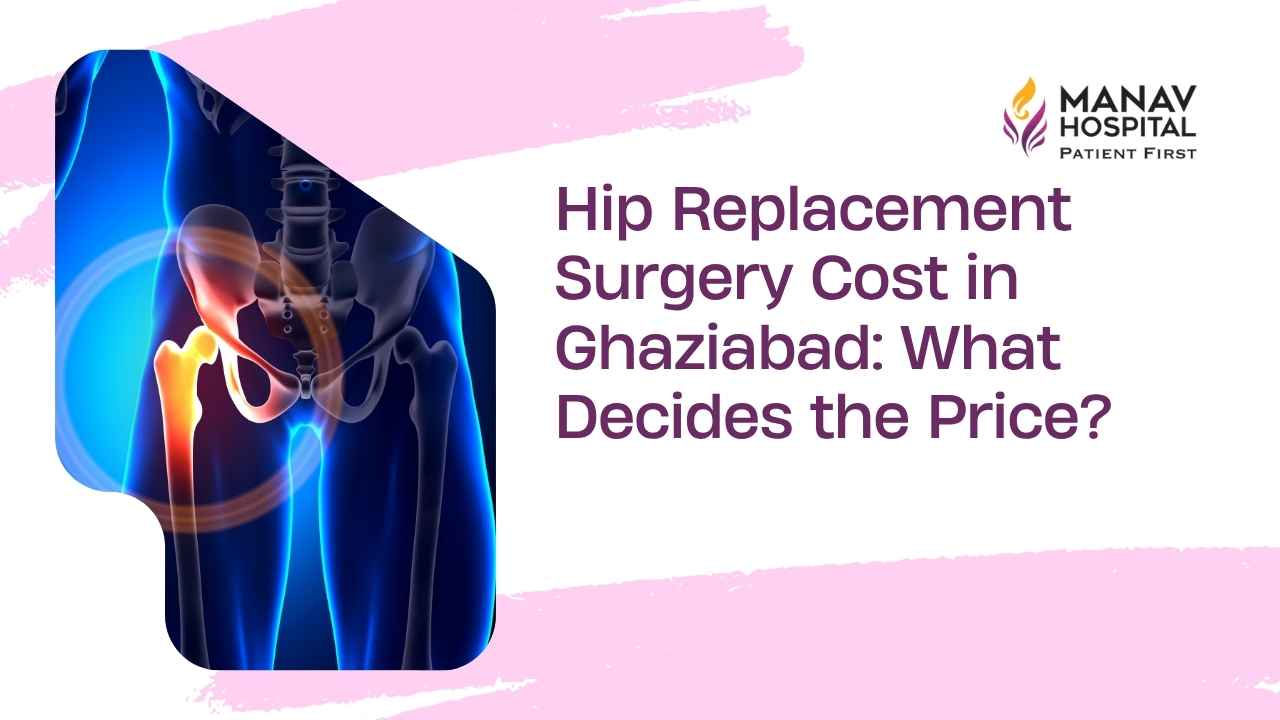
Manav Hospital’s orthopaedic department covers more than just joint replacement and arthroscopy. Complex fracture surgery is handled by the team for patients with fractures around the knee or in the lower limb that require surgical fixation. Total hip replacement is also available for patients where hip pathology is contributing to or coexisting with knee problems, which is more common than most people realise, given the way load is distributed through the lower limb.
Conclusion
Seeing a knee orthopaedic surgeon in Ghaziabad is not only for patients who need surgery. It is for anyone whose knee problem has gone beyond what general management can address, or where the nature of the injury suggests that proper specialist assessment from the beginning will lead to a better outcome. Knowing when that threshold has been reached is what this guide is designed to help with.
Frequently Asked Questions
Q. Do I need a referral to see a knee orthopaedic surgeon at Manav Hospital in Ghaziabad?
No referral is needed for a direct consultation. CGHS patients requiring surgical procedures will need a referral letter for admission, but an initial OPD consultation does not require one.
Q. How long does a knee assessment take at Manav Hospital?
A thorough first consultation, including history, clinical examination, and review of existing imaging, typically takes 20 to 30 minutes. If new imaging is needed, it is arranged separately and followed up at a subsequent visit.
Q. What is the difference between a general orthopaedic surgeon and a knee specialist?
A general orthopaedic surgeon covers the full range of musculoskeletal conditions. A surgeon with a specific focus on knee conditions has higher procedural volume in knee-specific surgeries and deeper familiarity with the range of non-surgical and surgical options available for knee problems specifically.
Q. Can knee problems be treated without surgery at Manav Hospital?
Yes. Many knee conditions are managed conservatively through a combination of physiotherapy, medication, injections, and lifestyle guidance. Surgery is recommended when conservative treatment has been genuinely exhausted or when the nature of the injury makes non-surgical management unlikely to succeed.
CTA
Book an Orthopaedic Consultation at Manav Hospital, Ghaziabad