Overview
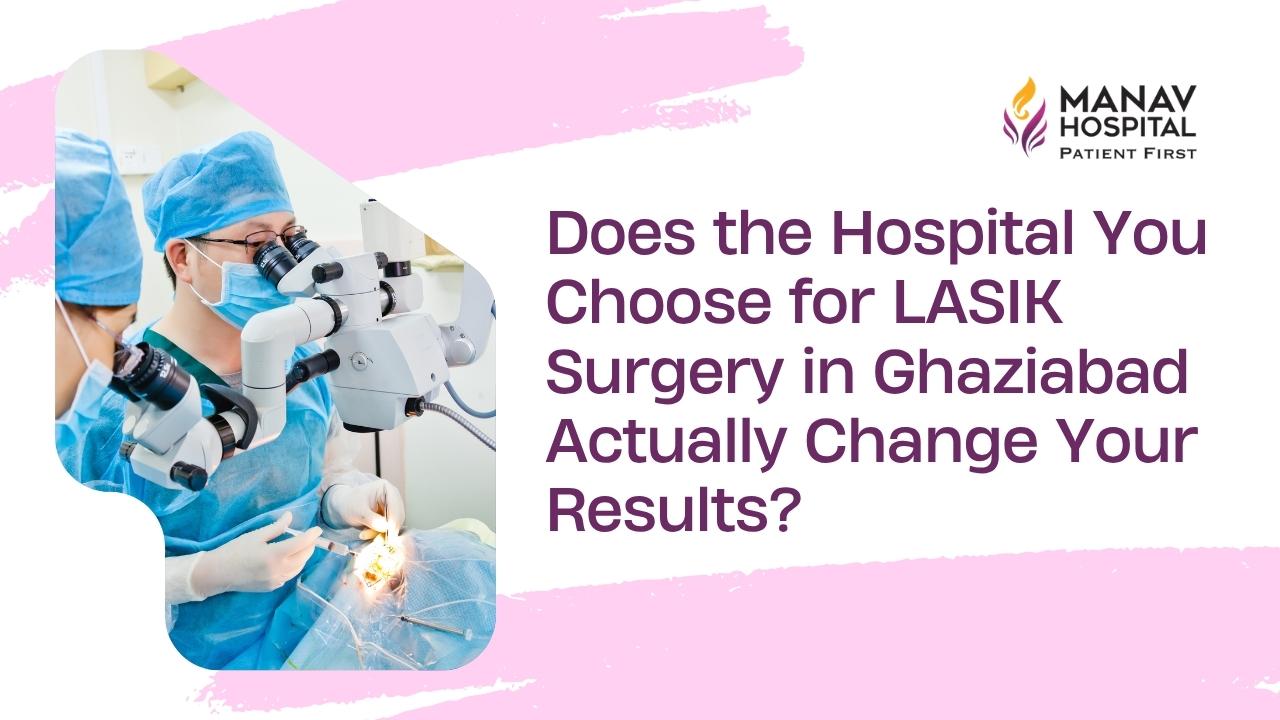
LASIK surgery is widely available in Ghaziabad. Eye clinics, standalone refractive centres, and full-service hospitals all offer it. The price range is significant. The technology used varies. And the experience level of the surgeon performing the procedure varies even more.
Most people focus on cost and technology when researching LASIK. Those things matter, but they are not the complete picture. The hospital or clinic you choose affects your results in ways that go beyond the laser machine being used.
At Manav Hospital in Ghaziabad, LASIK and advanced laser eye surgery procedures are performed by Dr Rajat Gupta, a consultant ophthalmologist with specific expertise in refractive surgery. The ophthalmology department has performed over 80,000 eye procedures since the hospital was established in 1980.
Why Does the Pre-Operative Assessment Matter So Much?
This is where most of the variation between good and poor LASIK outcomes originates. The laser does not determine whether you are a suitable candidate — the pre-operative assessment does.
A thorough LASIK assessment includes:
• Corneal topography to map the shape and thickness of the cornea
• Wavefront analysis to detect higher-order aberrations
• Pupil size measurement — important for night vision outcomes
• Refraction under cycloplegia for an accurate prescription
• Tear film assessment to evaluate dry eye risk before surgery
• Overall ocular health examination
Clinics that rush through pre-operative assessment or skip components of it create risk. Patients who are not suitable candidates for LASIK and proceed anyway are the ones who end up with compromised outcomes.
What Technology Is Available and Why Does It Matter?
The laser platform used affects the precision and quality of the procedure. Older excimer laser systems are less accurate than current-generation platforms.
Manav Hospital uses current-generation laser technology for both standard LASIK and Contoura Vision procedures. Both procedures at Manav use technology that meets international standards.
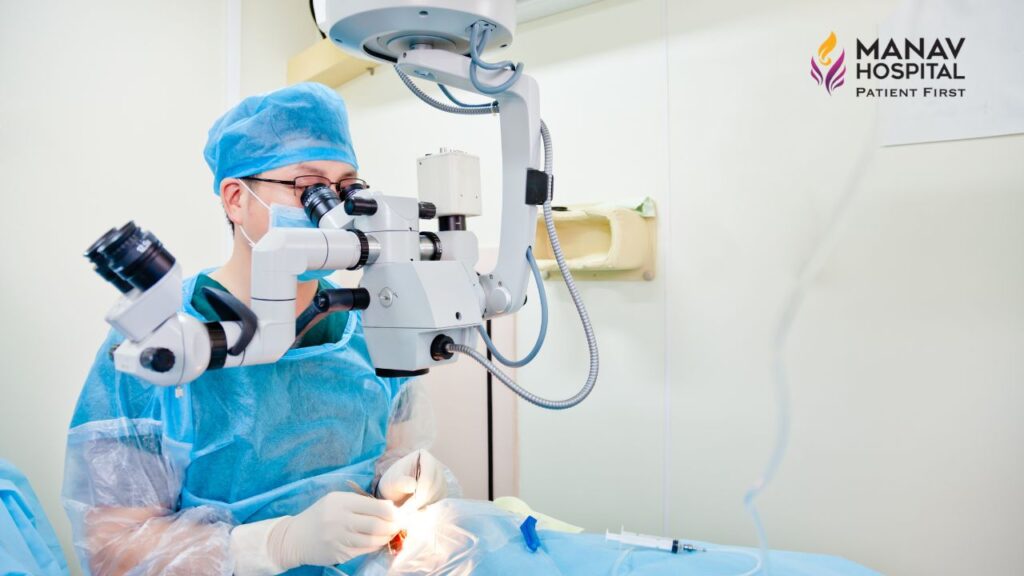
The microkeratome or femtosecond laser used to create the corneal flap also affects outcomes. Femtosecond laser flap creation is more precise and consistent than the mechanical microkeratome. Manav Hospital uses femtosecond laser flap creation as standard.
Does Surgeon Experience Change LASIK Results?
Yes. LASIK is a technically precise procedure. The pre-operative planning, intraoperative decision making, and management of any complications that arise all depend on the surgeon’s experience.
Volume matters. A surgeon who performs several hundred refractive procedures per year has encountered and managed a wider range of situations than one who performs the occasional procedure. That experience accumulates, and it shows in outcomes.
Dr Rajat Gupta at Manav Hospital has a dedicated focus on refractive surgery alongside comprehensive ophthalmology. The combination of high volume, current technology, and thorough pre-operative assessment is what makes a consistent difference to patient outcomes.
What About Post-Operative Care?
This is the part that gets the least attention in LASIK marketing and matters more than most patients realise.
Vision after LASIK stabilises over several weeks. The first follow-up is typically the day after surgery. Subsequent checks at one week, one month, and three months monitor healing and vision stabilisation.
If any issue arises during healing, having access to the same surgeon who performed the procedure and a fully equipped eye department behind them makes a significant difference to how quickly and effectively it is addressed.
At a standalone refractive centre, the post-operative support infrastructure is limited. At a full-service hospital like Manav, the ophthalmology department handles the full continuum of care from assessment through surgery to recovery.
What Other Eye Conditions Can Be Treated at Manav Hospital?
For patients not suitable for LASIK, ICL lens implantation offers an alternative. For patients with cataracts alongside a refractive error, premium cataract surgery with a multifocal IOL can address both simultaneously.
Other ophthalmology services available at Manav include glaucoma treatment, retina surgery, cornea and keratoconus treatment, and paediatric ophthalmology.
Conclusion
The hospital you choose for LASIK surgery in Ghaziabad does change your results. The pre-operative assessment determines whether you are a suitable candidate. The technology determines the precision. The surgeon’s experience determines how well the plan is executed. And the post-operative support determines how quickly any issues are identified and resolved. All four are worth evaluating before you book.
Book an Eye Consultation at Manav Hospital, Ghaziabad
Frequently Asked Questions
Q. How do I know if I am suitable for LASIK surgery in Ghaziabad?
A pre-operative assessment at Manav Hospital will determine this. Key factors include corneal thickness, prescription stability, absence of corneal disease, and overall ocular health.
Q. What is the difference between LASIK and Contoura Vision at Manav Hospital?
Standard LASIK corrects the refractive error using corneal curvature measurements. Contoura Vision maps the corneal surface at 22,000 data points and uses that detailed map to guide treatment, addressing subtle surface irregularities that standard LASIK does not.
Q. How long does LASIK vision correction last?
The corneal reshaping is permanent. Vision remains stable for most patients long-term. Age-related changes like presbyopia develop independently, as they would in anyone who has not had laser surgery.
Q. Can both eyes be treated on the same day?
Yes. Both eyes are typically treated in the same session. The procedure for each eye takes around 10 to 15 minutes and is done one after the other on the same day.