
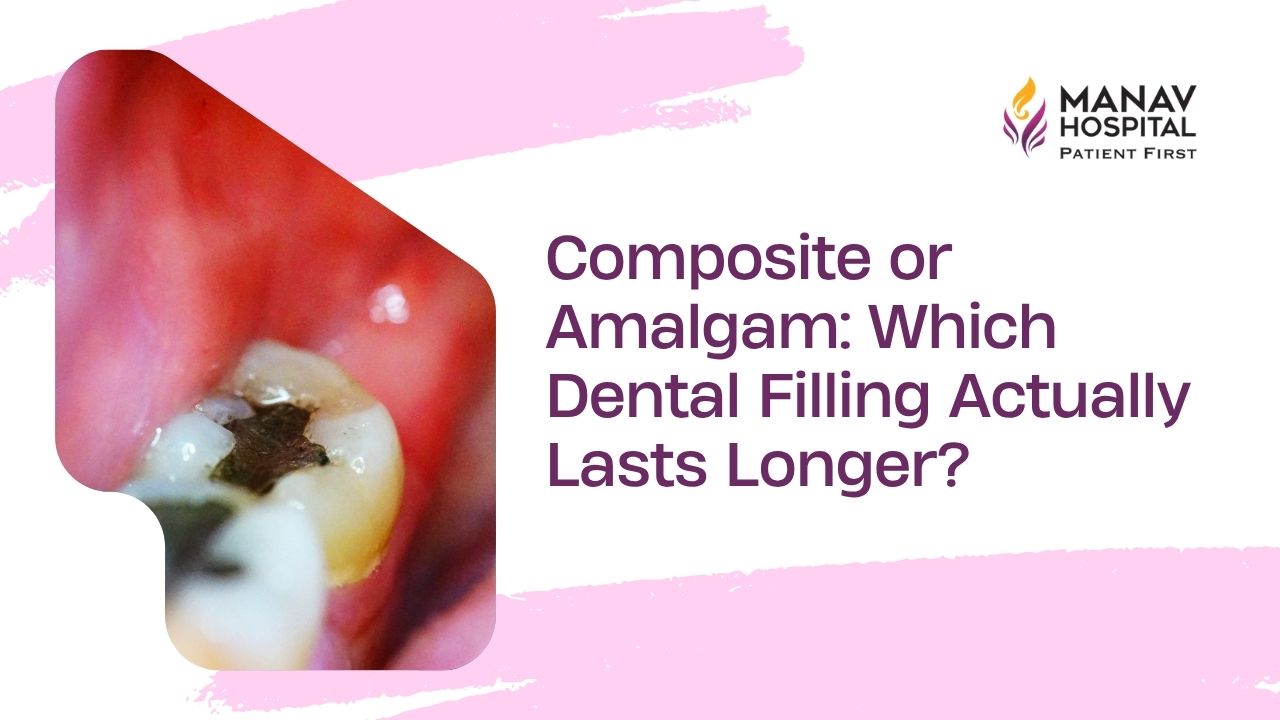
Overview
Patients often assume composite is the obviously better filling since it looks natural, but durability and tooth location matter just as much as appearance. Getting this right starts with consulting a dental surgeon for fillings in Ghaziabad about which material actually suits the tooth in question. Dr. Kanika Gupta, associated with Manav Hospital, has placed both filling types across years of restorative dental practice.
What Does a Dental Filling Surgeon Do?
Core responsibilities include:
• Removing decayed tooth structure before placement
• Matching filling material to the tooth’s location and function
• Bonding composite in layers or shaping amalgam for durability
• Advising on cost differences between the two materials
• Monitoring fillings over time for cracks or wear
Matching the material to the specific tooth matters more than a blanket preference for one type.
Meet Dr. Kanika Gupta – Trusted Name in Dental Fillings
Patients want a dentist who recommends a material based on the tooth, not a default habit.
Professional Highlights:
• Master’s degree in dental surgery with restorative specialisation
• Years of experience placing both composite and amalgam fillings
• Life member of the Indian Society of Oral Implantologists (ISOI)
• Skilled in cosmetic dentistry and full-mouth restoration
• Known for explaining the cost-versus-durability tradeoff clearly
Dr. Gupta assesses grinding habits, cavity size, and tooth location before recommending a specific filling material, rather than applying the same rule to every patient.
Advanced Filling & Restoration Options Offered
1. Composite Resin Fillings
Tooth-coloured and bonded directly to the structure, offering:
• A near-invisible cosmetic result
• Less removal of healthy tooth structure
• Typical durability of five to seven years
• Best suited to visible front teeth
2. Amalgam Fillings
More durable, typically lasting ten to fifteen years, and well suited to molars bearing heavy chewing pressure.
3. Crowns for Large Cavities
Recommended when a cavity is too large for either filling material to hold up long-term.
4. Filling Replacement
For an existing filling that has cracked, loosened, or stained over time.
Why Choose Manav Hospital for Dental Fillings in Ghaziabad?
Key advantages:
• Both composite and amalgam options available in-house
• Clear, itemised cost breakdowns by material and cavity size
• Modern curing and bonding technology for composite work
• A dedicated, hygienic filling treatment room
• Regular checkups to catch early filling wear
A dental team that explains both material options honestly helps patients choose based on their actual needs, not marketing.
Signs a Filling May Need Attention
Consult a dental surgeon if you notice:
• Visible cracks or chips in an existing filling
• New sensitivity to hot or cold near a filled tooth
• A filling that feels loose or uneven when biting
• Discolouration spreading around the filling’s edge
• Food consistently catching in the same spot
• Discomfort while chewing on one side
Dr. Kanika Gupta evaluates each of these signs to determine whether a repair, replacement, or crown is the right next step.

Step-by-Step Filling Journey
1. Initial Consultation
The cavity is examined, and the appropriate material is discussed.
2. Local Anaesthesia (if needed)
Applied for cavities close to the nerve.
3. Decay Removal
The dentist clears out the decayed portion of the tooth.
4. Material Placement
Composite is layered and cured, or amalgam is packed and shaped.
5. Final Check and Bite Adjustment
The filling is checked and adjusted for a comfortable bite.
Benefits of Choosing the Right Filling Material
• ✔ A natural, invisible result where cosmetics matter most
• ✔ Long-term durability where chewing force matters most
• ✔ Reduced risk of premature cracking or replacement
• ✔ Cost aligned with the tooth’s actual functional need
• ✔ Fewer follow-up repairs when the material fits the case
Matching material to tooth location consistently produces better long-term results than a one-size-fits-all choice.
Recovery and Aftercare: The Key to Success
Both filling types need the same basic follow-through to last as long as expected.
Aftercare includes:
• Consistent brushing and flossing around the filled tooth
• Avoiding habitual chewing on ice or very hard foods
• Limiting stain-causing foods and drinks around composite fillings
• Avoiding chewing on the amalgam side for a few hours after placement
• Routine six-month checkups to catch small issues early
With reasonable care, a well-placed filling of either material can comfortably outlast its typical estimated lifespan.
Why Ghaziabad is a Preferred Destination for Dental Fillings
• Dentists trained in both composite and amalgam techniques
• Transparent, itemised cost comparisons by material
• Modern bonding and curing technology on-site
• More affordable than many metro dental clinics
• Established follow-up systems for long-term filling care
This makes Manav Hospital a practical choice for patients weighing cost against durability.
Conclusion
Choosing between composite and amalgam comes down to where the filling sits and how much it needs to withstand, not which material is newer. Dr. Kanika Gupta and the dental team at Manav Hospital match material to tooth on a case-by-case basis.
That approach protects both the tooth’s function and its appearance over the years that follow.
Take the first step toward the right filling for your tooth and book a consultation here.
Frequently Asked Questions
Who is the best dental surgeon for fillings in Ghaziabad?
Dr. Kanika Gupta, associated with Manav Hospital, is a trusted name in restorative dentistry. See patient updates on Instagram.
When should I consider composite over amalgam?
When the filling is in a visible tooth where cosmetics matter more than maximum durability.
Is amalgam better than composite for molars?
Often yes, since amalgam typically withstands heavy chewing pressure longer than composite.
How long does a filling appointment take?
Usually a single visit, though composite placement takes slightly longer due to layering and curing.
How long do fillings typically last?
Composite lasts about five to seven years, while amalgam typically lasts ten to fifteen years.