A torn meniscus is not always an operation. Small tears with few symptoms may settle with rest, physiotherapy and time. When surgery is needed, the surgeon chooses between stitching the tear (repair) and trimming away the damaged part (partial meniscectomy). The main factors are where the tear sits, its shape and size, whether it’s from injury or wear, and your age and activity. Repair protects more of the meniscus but needs a longer recovery. You can request an appointment at Manav Hospital here.
Overview
You twisted your knee getting up from the floor, and it’s been “off” ever since. It clicks sometimes. It catches on the stairs. Once or twice it locked halfway through a step, and you stood there, stuck, waiting for it to let go.
An MRI says “meniscus tear”. Then the advice starts. One friend says “just get it removed, my uncle was walking in a week”. Another says “never remove it, you’ll get arthritis”. The truth sits in between, and it depends on your tear.
This guide explains what the meniscus is, how tears happen, how to tell when you can manage without surgery, how surgeons choose between repair and removal, what recovery looks like for each and which questions are worth asking. The orthopaedic department at Manav Hospital in Ghaziabad lists meniscus repair and excision among its procedures, under Dr. Sharad Gupta. This is general information, not a diagnosis, and your own surgeon’s advice comes first.
What Is the Meniscus?
In plain words
● Each knee has two C-shaped rubbery cushions, the menisci, between the thighbone and shinbone
● They absorb shock, spread load and help keep the knee stable
● Tears happen from sudden twists in sport or from gradual wear with age
● A torn meniscus can cause pain, swelling, clicking, catching or locking
● Losing a lot of meniscus can raise the chance of arthritis later
The meniscus is the knee’s shock absorber. The goal is to keep as much of it as is sensible.
Meet Dr. Sharad Gupta
Dr. Sharad Gupta is an orthopaedic and arthroplasty surgeon at Manav Hospital. His profile lists an MBBS from Rajiv Gandhi University of Health Sciences (Bangalore), an MS in Orthopaedics from Jawaharlal Nehru Medical College, Wardha, a fellowship from Sunshine Hospital, Hyderabad and a Fellowship in Arthroplasty and Adult Reconstruction from Mt Sinai Hospital, Toronto. Memberships listed include the Indian Orthopaedic Association, Indian Arthroplasty Association and Indian Arthroscopy Society.
Professional Highlights
● Arthroscopy (keyhole) surgery for the knee and shoulder is among his listed areas of work
● Named as the surgeon for meniscus procedures on the hospital’s service page
● OPD timings on his profile: Monday to Saturday, 11 am to 2 pm and 5 pm to 7 pm, Sunday off. Please confirm before visiting
● Based at Manav Hospital, 1 B Block, Kavi Nagar, Ghaziabad
Knee catching or locking? Book a consultation and bring your MRI if you have one.
Meniscus Tear Symptoms
● Pain along the inner or outer side of the knee
● Swelling that builds over a day or two
● A catching, popping or clicking feeling
● Locking, where the knee won’t straighten fully
● A feeling of giving way
● Pain on twisting, squatting or deep bending
Not every meniscus tear hurts. Some are found on an MRI done for another reason, which is why imaging alone shouldn’t decide on surgery. Symptoms and examination matter just as much.
How Do Meniscus Tears Happen?
● Injury (acute): A twist while the foot is planted, common in football, badminton, cricket and kabaddi
● Wear (degenerative): The meniscus gets weaker with age, so even a routine movement like squatting or getting out of a chair can tear it
● Together with other injuries: Meniscus tears often go along with ACL tears. See our guide on ACL reconstruction surgery
Do You Always Need Surgery?
No. Manav Hospital’s page notes non-surgical care (rest, ice, compression and elevation) for small tears without persistent symptoms. A well-known orthopaedic centre, Hospital for Special Surgery, notes that surgery tends to help most with large, traumatic tears that cause mechanical symptoms such as catching, locking or buckling. In degenerative tears with existing arthritis, physiotherapy has shown improvements in pain and function comparable to meniscectomy in studies.
Non-surgical care may be enough if
● The tear is small or degenerative
● Pain is mild and improving
● There’s no locking
● The knee feels stable
● You can commit to physiotherapy and activity changes
Surgery is more likely to be discussed if
● The knee locks or catches repeatedly
● Pain is severe or keeps returning
● Symptoms persist after proper non-surgical treatment
● The tear is large, displaced or from a recent injury
● There are other injuries, such as an ACL tear
● You’re a younger, active patient with a repairable tear
Get seen soon if
● The knee is locked and won’t straighten
● Swelling and pain follow a twisting injury
● The knee gives way during normal walking
● Symptoms haven’t settled after a few weeks
Go to an emergency department if
● You can’t bear weight after an injury
● The knee looks deformed
● It becomes red, hot and very painful with fever
Repair or Removal: How Do Surgeons Decide?
This is the heart of the question. Surgeons weigh several things together.
1. Where the Tear Is: Red Zone vs White Zone
The outer third of the meniscus (the red zone) has a blood supply, so a repaired tear there has a real chance of healing. The inner part (the white zone) has very little blood supply, so stitches are less likely to hold, and trimming is often chosen instead. Hospital for Special Surgery says that tears in the red zone have a chance to heal following repair.
2. The Shape and Size of the Tear
Clean, simple, recent tears are more repairable. Frayed, complex or very degenerate tissue usually isn’t. Large “bucket-handle” tears that lock the knee may need surgery sooner.
3. Injury or Wear?
A fresh injury in a young person is often repairable. A worn, degenerate tear in an older knee is more often trimmed or treated without surgery.
4. Age and Activity
A young athlete has more to gain from keeping the meniscus. An older, less active person may prefer the faster recovery of trimming. This is a conversation, not a formula.
5. Other Injuries
If the ACL is torn as well, the meniscus repair may be done at the same time, because a stable knee helps the repair heal.
6. What You Want and Can Do
Repair means a longer period of protection and rehab. Your job, family, sport and willingness to follow a plan all count.
Surgeons aren’t choosing “good” versus “bad”. They’re choosing between faster recovery and keeping more of your own meniscus.
Types of Meniscus Surgery
Manav Hospital’s page lists these options.
Arthroscopic Meniscus Repair
Done by keyhole surgery. The surgeon places small devices or stitches to close the tear. The page notes the device is absorbed by the body over time.
Partial Meniscus Excision (Meniscectomy)
Only the torn, unstable portion is removed, and the healthy part stays. The aim is to let the knee move normally again without catching.
Total Meniscus Excision
Removing the whole meniscus. This is less common, as losing the whole cushion can increase long-term wear.
Meniscus Transplant
Considered by some centres when there’s extensive meniscus loss in younger patients without arthritis. It’s a specialised option and not listed on the hospital’s page, so ask your surgeon if it’s relevant to you.
The page describes the operation as typically around an hour, though the time varies with the case.
Recovery: Repair vs Removal
Recovery differs a lot between the two, and this is where many people are surprised.
After Partial Meniscectomy
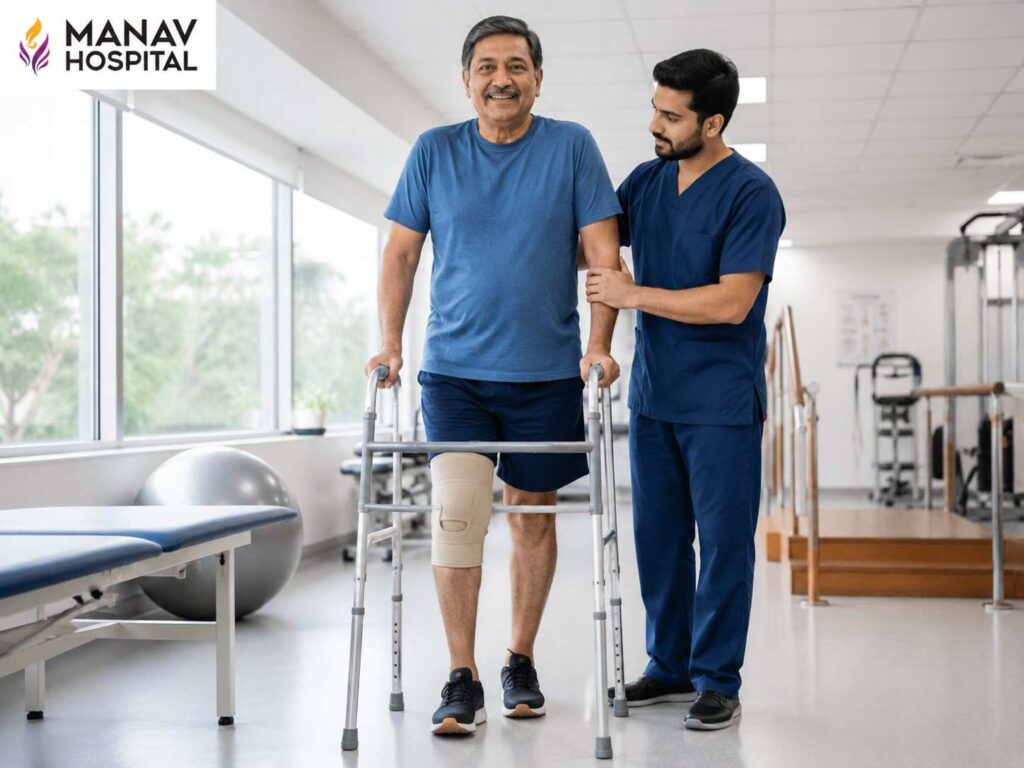
● Weight-bearing is usually allowed soon after surgery, sometimes with crutches for a short while
● Hospital for Special Surgery suggests return to sports in about 4 to 8 weeks for many patients
● Physiotherapy focuses on swelling, movement and strength
After Meniscus Repair
● Protection is usually longer, sometimes with a brace and limits on bending or weight-bearing, as your surgeon directs
● Return to sports is often about 6 to 9 months, since the tissue needs time to heal
● Rehab is gradual and supervised
Recovery habits that help
● Follow weight-bearing and brace instructions exactly
● Do your physiotherapy exercises daily. The physiotherapy department is headed by Dr. Akash Saxena (BPT, MPT)
● Control swelling with elevation and cold packs as advised
● Build thigh strength before returning to sport
● Don’t squat deeply or twist on a planted foot until cleared
Mistakes to avoid
● Returning to sport after a repair at six weeks because it “feels fine”
● Skipping rehab after a quick meniscectomy
● Ignoring swelling that increases
● Self-medicating for months without a diagnosis
● Skipping follow-up visits
What About Arthritis Later?
This is a fair worry. The meniscus protects the cartilage, and losing a lot of it can raise the chance of arthritis over time. That’s why surgeons try to save as much meniscus as sensible. At the same time, an untreated locking tear can keep damaging the joint, so avoiding surgery isn’t always safer. Both over- and under-treating carry costs, and the right balance is individual. If you already have arthritis changes, see our guide on knee arthritis and the knee surgeon.
Risks to Understand
● Infection, bleeding and blood clots, as with any surgery
● Persistent pain or swelling
● A repair that doesn’t heal and needs further surgery
● Stiffness
● Nerve or blood vessel injury, which is rare
● Arthritis progression over the years
Questions to Ask Your Surgeon
● Is my tear in the red zone or the white zone?
● Is it repairable, or would trimming be wiser?
● What happens if I wait or try physiotherapy first?
● Is there other damage, such as the ACL or cartilage?
● What will recovery look like for each option?
● When can I go back to work and sport?
● How will this affect my knee in the long run?
Before any consultation, it also helps to read when to see a knee orthopaedic surgeon and not just a general doctor.
Why Choose Manav Hospital for Meniscus Care?
Key advantages
● Arthroscopic repair, partial excision and total excision all listed
● An orthopaedic surgeon with arthroscopy and arthroplasty training in his profile
● A high-definition arthroscope, C-arm imaging and modular operation theatres with HEPA filtration listed among equipment
● A physiotherapy department on site
● TPA and cashless support for patients with mediclaim or health insurance, as listed on the site. Please confirm cover with the hospital
Learn more about arthroscopy (keyhole) surgery, or book an appointment.
What Are the Benefits of a Timely Assessment?
✔ A clear diagnosis, rather than guessing
✔ A better chance of saving your meniscus
✔ A plan that matches your activity and age
✔ Fewer repeated episodes of locking and swelling
✔ A recovery plan you understand upfront
Staying Informed
Manav Hospital shares updates on Facebook, Instagram, YouTube and LinkedIn. Results vary from person to person, and no outcome is guaranteed.
Why Do Ghaziabad Patients Choose Manav Hospital?
● Multi-speciality care under one roof
● A 24×7 emergency ambulance and helpline on +91-9718942666
● A Kavi Nagar location near State Bank of India and the Post Office
● Orthopaedic, imaging and physiotherapy services in one place
● Online appointment booking through the website
Conclusion
A torn meniscus asks for a decision, not a panic. Some tears settle with time and rehab. Others need keyhole surgery, and then the real question is whether to repair or trim. Location, shape, cause, age and activity guide that choice, and recovery looks very different for each. Ask the questions, get your MRI explained and plan your rehab before surgery. If your knee is catching or locking, Manav Hospital’s orthopaedic team can assess it.
Contact Manav Hospital
Address: 1, B Block, Kavi Nagar, Ghaziabad, Uttar Pradesh 201002
Phone and 24×7 emergency helpline: +91-9718942666
Email: info.manavhospital@gmail.com
Follow on: Facebook | Instagram | YouTube
Book your knee consultation at Manav Hospital here
FAQs
Can a torn meniscus heal on its own?
Small tears, especially in the outer, blood-rich part, may settle with rest and rehab. Tears in the inner part rarely heal well by themselves. A doctor can advise after examination and MRI.
Is meniscus repair better than removal?
Repair keeps more of your own meniscus, but recovery is longer and not every tear can be repaired. Removal of the torn part gives a quicker return but loses some cushioning. The choice depends on your tear and your life.
How long is recovery after meniscus surgery?
After partial removal, many people return to sport in a few weeks. After repair, it is often several months, around 6 to 9 months for sport. Your surgeon will guide you.
Will I get arthritis if my meniscus is removed?
Losing a lot of meniscus can raise the risk of arthritis over time, which is why surgeons try to preserve it. Individual risk varies.
What are the signs of a meniscus tear?
Pain, swelling, clicking, catching, locking and giving way, often after a twist. An examination and MRI confirm it.
Can I walk after meniscus surgery?
Often yes, with crutches or a brace for a short time. After a repair, limits on weight-bearing may last longer. You can contact the hospital to discuss your case.