Most floaters are harmless drifting specks that come from the jelly inside the eye changing with age. But a sudden shower of new floaters, repeated flashes of light, or a shadow or curtain across your vision can signal a retinal tear or detachment, which needs a dilated eye examination the same day if possible. Flashes alone cannot be told apart from a tear without an exam. You can request an eye appointment at Manav Hospital here.
Overview
It usually starts quietly. You’re reading a message on your phone, or looking at a plain wall or a bright sky, and notice a small speck or squiggle drifting across your vision. You blink. It moves with your eye. You look away and it follows.
For most people, that’s a floater, and it’s more of an annoyance than a danger. But then there’s the other version (a hypothetical, but one eye doctors hear often). Someone notices a few floaters, thinks “it’s nothing”, and ignores them. Two days later there’s a dark curtain creeping in from the side of one eye.
So how do you tell the harmless from the urgent? That’s what this guide covers: what floaters and flashes are, why they happen, the warning signs that shouldn’t wait, who’s at higher risk, what an eye check involves, how retinal tears and detachments are treated and what you can do in the meantime. The ophthalmology department at Manav Hospital in Kavi Nagar, Ghaziabad lists retina surgery and treatment among its services. This is general information, not a diagnosis, and it can’t replace an eye examination.
What Are Floaters and Flashes?
In plain words
● Floaters are small spots, threads or cobweb shapes that drift in your vision, most visible against a plain bright background
● They’re caused by tiny clumps in the vitreous, the clear gel filling the eye
● Flashes are brief streaks or sparks of light, often at the edge of vision
● They happen when the vitreous gel tugs on the retina, the light-sensing layer at the back of the eye
● Both are common as we age, but a sudden change can be a warning
A floater is a shadow cast on the retina. A flash is the retina being tugged. One is usually harmless. The other deserves attention.
Meet the Eye Team
Manav Hospital’s ophthalmology team includes Dr. Harish Gupta (Senior Ophthalmologist), Dr. Rajat Gupta and Dr. Malvika Gupta, all listed on the hospital’s doctors page. The hospital’s other doctors listing also names Dr. Ritika Gaur (MBBS, MS, FICO, FMRF) with a vitreo-retina, uvea, ROP and phaco focus.
Professional Highlights
● Retina services listed include diabetic and hypertensive retinopathy treatment, retinal detachment surgery, macular hole surgery and injections for retinal swelling
● Equipment listed includes green laser, vitrectomy machine, OCT scan and indirect laser ophthalmoscope
● Other eye services include cataract, glaucoma and cornea care
● Based at Manav Hospital, 1 B Block, Kavi Nagar, Ghaziabad
Noticed new floaters or flashes? Book an eye check without waiting for them to “settle”.
Why Do Floaters Happen?
The vitreous starts life as a firm, clear gel. With age, it gradually thickens, shrinks and becomes more liquid. Little strands and clumps form, and their shadows are what you see as floaters.
Eventually, the gel may peel away from the retina in a process called posterior vitreous detachment (PVD). It’s common, especially after 50, and often harmless. You might notice a sudden new floater or a ring-shaped shadow, and a few flashes that settle over days to weeks.
The problem is that the gel doesn’t always separate cleanly. If it stays stuck and pulls, it can create a retinal tear. Fluid can then seep through the tear and lift the retina, which is a retinal detachment, a sight-threatening emergency.
Harmless or Urgent? A Practical Guide
| What you notice | Usually | What to do |
| A few long-standing floaters, stable for months | Harmless, age-related | Mention at your next routine eye check |
| One or two new floaters, no flashes, vision clear | Often a gel change, but still needs a check | Book an eye exam within a few days |
| A sudden shower of black dots or many new floaters | Possible tear or bleeding | Same-day eye examination |
| New flashes of light, especially repeated | Possible retinal traction or tear | Same-day eye examination |
| A grey curtain or shadow moving across your vision | Possible retinal detachment | Emergency, get to an eye hospital now |
| Loss of side vision, or blurred or distorted central vision | Possible detachment or macular problem | Emergency |
Urgent warning signs (don’t wait)
● A sudden increase in floaters, such as a shower of dark spots
● New or repeated flashes of light
● A curtain, shadow or veil across part of your vision
● Loss of peripheral (side) vision
● Blurred or wavy central vision
● Floaters or flashes after an eye injury
These are the signs that eye centres such as Duke Eye Center and Centre for Sight highlight. The advice from eye specialists is that flashes alone can’t be told apart from a tear without a dilated exam.
If you’re asking yourself “should I get this checked?”, the answer is usually yes. An eye exam is cheap. Lost vision isn’t.
Who Is at Higher Risk?
● People over 50
● Those with high short-sightedness (myopia)
● Anyone who has had an eye injury
● People who’ve had eye surgery, including cataract surgery. See our guide to cataract surgery recovery
● People with diabetes and diabetic eye disease
● Those with a family history of retinal detachment
● Anyone who has had retinal tears or detachment in the other eye
If you wear strong glasses, our article on why your vision keeps changing even with glasses explains other eye conditions that need checking.
What Happens at the Eye Examination?
● History: When the symptoms began, what you see, any injury or eye surgery
● Vision test: Checking how well you see
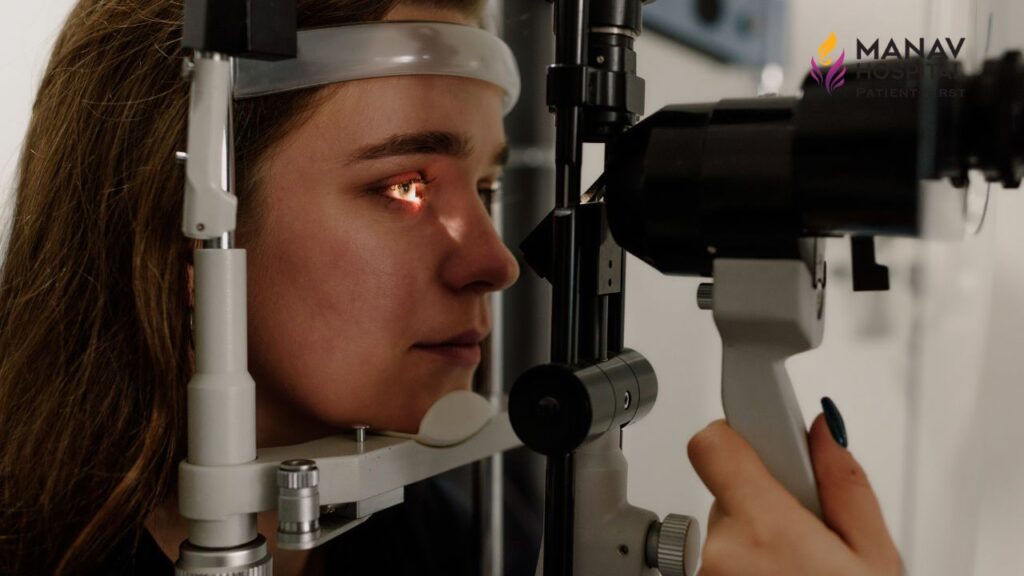
● Dilated exam: Drops widen your pupils so the doctor can examine the whole retina, including the edges, where tears often start
● OCT scan or ultrasound: Used when needed to look more closely at the retina, or when bleeding or cloudiness blocks the view
Dilation makes your vision blurry and light-sensitive for a few hours, so bring someone with you if you can, and avoid driving afterward.
How Are Retinal Tears and Detachments Treated?
The treatment depends on what the exam finds. Manav Hospital’s retina page lists retinal detachment surgery and laser equipment among its services.
No Tear
If the gel is separating without damage, no treatment is needed. You’ll be told which symptoms to watch for, and often asked to return for a repeat check.
A Retinal Tear
A tear can often be sealed in an outpatient setting with laser (photocoagulation) or freezing treatment (cryopexy). The aim is to create a seal around the tear so fluid can’t get under the retina.
Retinal Detachment
Detachment needs surgery. Depending on the case, this may involve removing the gel (vitrectomy), supporting the retina with a band (scleral buckling) or using a gas bubble. Eye centres note that prompt treatment greatly improves the chance of saving vision, though results vary and no outcome is guaranteed.
Do Floaters Ever Need Treatment?
Most floaters don’t. The brain adapts, and they become less noticeable over weeks to months. Treatment is rarely needed, and options for very bothersome floaters carry their own risks, so they’re discussed individually with a retina specialist. Avoid “floater-clearing” drops or supplements that promise to dissolve them, since no home remedy is known to remove floaters.
What You Can Do in the Meantime
Helpful
● Get a dilated eye exam for any new floaters or flashes
● Keep a note of when symptoms started, and whether they’re changing
● Cover one eye at a time and check your side vision
● Go to a hospital with an eye department if you notice a curtain or sudden loss of vision
● Control diabetes and blood pressure
● Have regular retina checks if you’re high-risk
Best avoided
● Waiting “a few weeks to see if it settles” when symptoms are new and sudden
● Rubbing or pressing on the eye
● Using random eye drops
● Heavy lifting or high-impact activity if a tear has been diagnosed, until your doctor says it’s safe
● Assuming a pain-free eye is a healthy eye. Retinal detachment doesn’t usually hurt
Questions to Ask Your Eye Doctor
● Is this a harmless gel change or a retinal tear?
● Do I need a repeat check, and when?
● Which symptoms should send me back immediately?
● Am I at higher risk because of my eyes or health?
● Do I need laser or other treatment, and what happens after?
● Are there activity restrictions I should follow?
If your child has eye turning or other vision concerns, see our article on squint in children.
Why Choose Manav Hospital for Eye and Retina Care?
Key advantages
● A dedicated ophthalmology department covering retina, cataract, glaucoma, cornea, squint and more
● Retina services listed, including detachment surgery and laser equipment
● OCT and other imaging listed among equipment
● Emergency ambulance and helpline listed as 24×7
● TPA and cashless support for patients with mediclaim or health insurance, as listed on the site. Please confirm cover with the hospital
Learn more about retina surgery and treatment, or book an appointment.
What Are the Benefits of Getting Floaters Checked Early?
✔ A clear answer on whether it’s harmless or not
✔ A chance to treat a tear before it becomes a detachment
✔ Peace of mind, and a safety plan if it’s benign
✔ A baseline for future changes
✔ Protection of your vision when time matters
Staying Informed
Manav Hospital shares updates on Facebook, Instagram, YouTube and LinkedIn. Results vary from person to person, and no outcome is guaranteed.
Why Do Ghaziabad Patients Choose Manav Hospital?
● Eye, dental and orthopaedic care under one roof
● A 24×7 emergency ambulance and helpline on +91-9718942666
● A Kavi Nagar location near State Bank of India and the Post Office
● Retina and general eye services in one hospital
● Online appointment booking through the website
Conclusion
Floaters are common and flashes can be harmless, but they’re also the way a retinal tear announces itself. The safest approach is simple. A sudden shower of floaters, repeated flashes, or a shadow across your vision means an eye check the same day. A few stable, long-standing floaters can be mentioned at your next routine visit. If you’re unsure which category you’re in, get examined. Manav Hospital’s eye team can assess it.
Contact Manav Hospital
Address: 1, B Block, Kavi Nagar, Ghaziabad, Uttar Pradesh 201002
Phone and 24×7 emergency helpline: +91-9718942666
Email: info.manavhospital@gmail.com
Follow on: Facebook | Instagram | YouTube
Book your eye consultation at Manav Hospital here
FAQs
Are eye floaters dangerous?
Usually not. Most come from age-related changes in the eye’s gel. But a sudden increase in floaters, especially with flashes or a shadow in your vision, can signal a retinal tear or detachment and needs urgent examination.
What do flashes of light in the eye mean?
They often happen when the vitreous gel tugs on the retina. They can be harmless, but they can’t be told apart from a retinal tear without a dilated exam, so get them checked.
When should I go to the doctor for floaters?
Same day for a sudden shower of floaters, repeated flashes or a curtain over your vision. Within a few days for a single new floater, even if vision seems fine.
Can floaters go away?
Many become less noticeable as the brain adapts, though they may not disappear fully. No drops or supplements are known to dissolve them.
What are the signs of retinal detachment?
New floaters, flashes, a curtain or shadow across the vision and loss of side vision. It is usually painless, which is why the signs matter.
Is retinal detachment treatable?
Yes, with prompt surgery in many cases, though outcomes vary and earlier treatment generally gives better chances of saving vision. You can contact the hospital for guidance, and seek emergency care if you notice a curtain over your vision.