
Overview
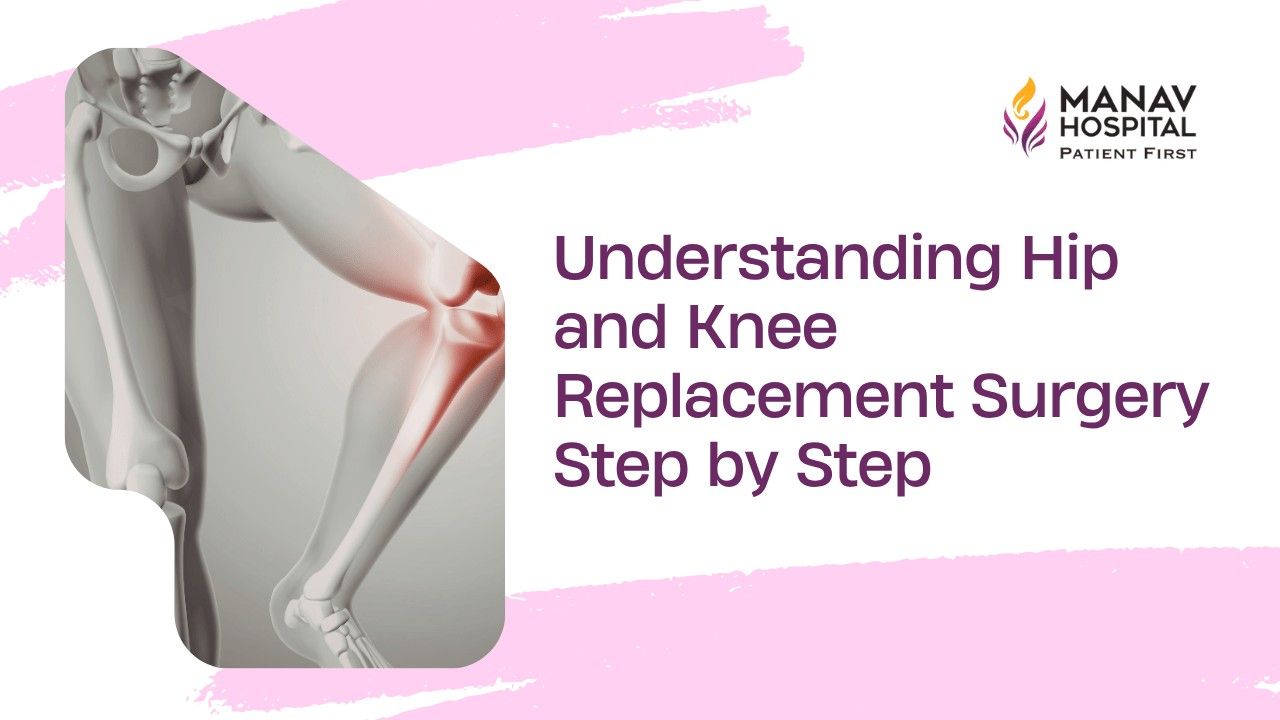
Joint pain, especially in the hip and knee, can severely limit mobility and affect everyday life. Conditions such as osteoarthritis, rheumatoid arthritis, injury, or age-related degeneration often lead to chronic pain and stiffness. When non-surgical treatments fail, hip and knee replacement surgery becomes the most effective solution.
If you are looking for advanced joint care, Manav Hospital Ghaziabad is a trusted name known for delivering high-quality orthopedic treatments. Under the expert guidance of Dr. Sharad Gupta, a leading joint replacement specialist, patients receive personalized care using modern surgical techniques.
This guide will help you in understanding hip and knee replacement surgery step by step, so you know exactly what to expect before, during, and after the procedure.

What is Hip and Knee Replacement Surgery?
Hip and knee replacement surgeries involve replacing damaged joint surfaces with artificial implants designed to mimic natural movement.
- Knee Replacement Surgery (Total Knee Arthroplasty): Replaces worn-out cartilage and bone in the knee joint.
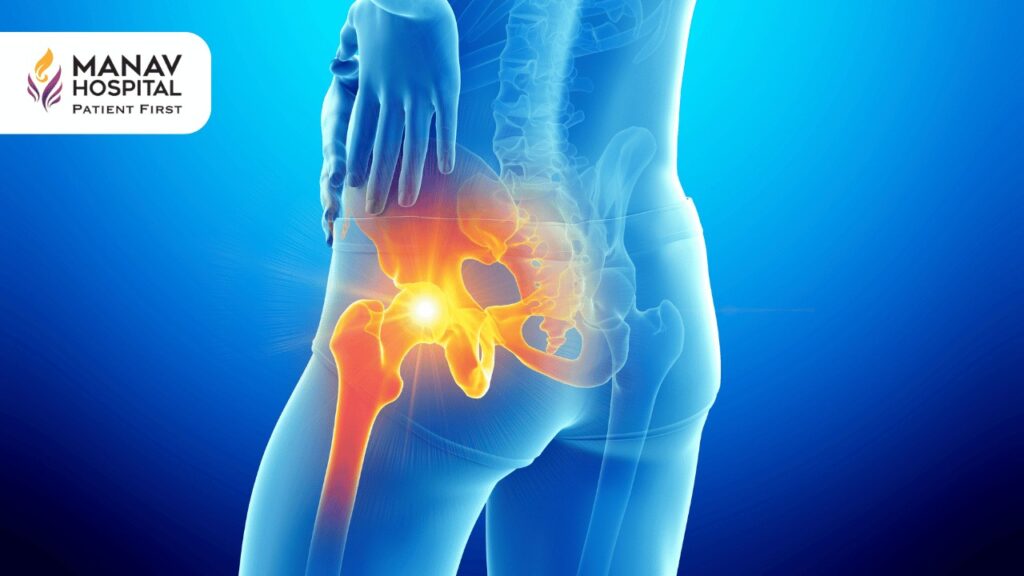
- Hip Replacement Surgery (Total Hip Arthroplasty): Replaces the damaged ball-and-socket joint of the hip.
Step-by-Step Process of Hip and Knee Replacement Surgery
Step 1: Initial Consultation and Diagnosis
The journey begins with a detailed consultation with an orthopedic expert like Dr. Sharad Gupta at Manav Hospital. During this stage:
- Medical history is reviewed
- Physical examination is conducted
- Imaging tests such as X-rays or MRI scans are advised
This helps determine the severity of joint damage and whether surgery is necessary.
Step 2: Non-Surgical Treatment Evaluation
Before recommending surgery, doctors usually explore conservative treatments such as:
- Medications for pain and inflammation
- Physiotherapy and strengthening exercises
- Lifestyle modifications and weight management
- Joint injections (PRP or steroids)
If these methods fail to provide relief, surgery becomes the next step.
Step 3: Pre-Surgical Planning
Once surgery is confirmed, detailed planning is carried out to ensure safety and precision:
- Blood tests and health evaluation
- Cardiac fitness check (if required)
- Selection of implant type and size
- Patient counseling regarding procedure and recovery
At Manav Hospital, advanced diagnostic tools and planning techniques are used to customize each surgery.
Step 4: The Surgical Procedure
Hip and knee replacement surgeries are performed in a sterile, fully equipped operation theatre.
For Knee Replacement:
- Damaged cartilage and bone are removed
- Artificial components are placed to recreate the joint
- Proper alignment and balance are ensured
For Hip Replacement:
- Damaged femoral head is removed
- Artificial ball and socket are implanted
- Smooth joint movement is restored
Modern techniques, including minimally invasive and precision-based surgery, are used to reduce complications and improve outcomes.
Step 5: Post-Surgery Recovery (Hospital Stay)
After surgery, patients are closely monitored:
- Pain management is initiated
- Early mobilization begins within 24 hours
- Physiotherapy sessions start under expert guidance
Most patients stay in the hospital for 3–5 days, depending on their recovery progress.
Step 6: Rehabilitation and Physiotherapy
Rehabilitation is one of the most critical steps in recovery. At Manav Hospital, structured physiotherapy programs include:
- Muscle strengthening exercises
- Range-of-motion training
- Walking and balance improvement
- Gradual return to daily activities
Consistency in rehabilitation ensures long-term success of the surgery.
Step 7: Full Recovery and Lifestyle Adjustment
Recovery timelines may vary, but generally:
- Basic activities resume within 4–6 weeks
- Full recovery takes 2–3 months
- Long-term mobility improves significantly
Patients are advised to maintain a healthy lifestyle, avoid high-impact activities, and follow regular check-ups.
Benefits of Hip and Knee Replacement Surgery
Under expert care at Manav Hospital Ghaziabad, patients experience multiple benefits:
- Significant reduction in joint pain
- Improved mobility and flexibility
- Better posture and balance
- Enhanced quality of life
- Long-lasting joint function
Modern implants and surgical techniques ensure durability and better patient satisfaction.
Why Choose Manav Hospital for Joint Replacement in Ghaziabad?
1. Expert Orthopedic Surgeon – Dr. Sharad Gupta
Dr. Sharad Gupta is a highly experienced joint replacement specialist known for his precision and patient-centric approach. His expertise in knee and hip surgeries ensures excellent outcomes.
2. Advanced Medical Infrastructure
Manav Hospital is equipped with:
- Modern operation theatres
- Advanced diagnostic imaging
- ICU and emergency care
- Infection-controlled environment
3. Comprehensive Departments
The hospital offers multi-specialty care, ensuring holistic treatment across all medical needs.
4. Personalized Patient Care
Every patient receives customized treatment planning, from diagnosis to recovery.
5. Strong Rehabilitation Support
Dedicated physiotherapy and follow-up care help patients recover faster and regain independence.
Who Should Consider Joint Replacement Surgery?
You may need hip or knee replacement if:
- Pain limits your daily activities
- You experience stiffness and reduced joint movement
- Medications and therapy no longer work
- You have severe arthritis or joint damage
Conclusion
Understanding hip and knee replacement surgery step by step helps patients make informed decisions about their health. With advancements in orthopedic care, these procedures have become safer, more effective, and life-changing.
At Manav Hospital Ghaziabad, patients receive world-class treatment backed by experience, technology, and compassionate care. Under the expertise of Dr. Sharad Gupta, joint replacement surgeries are performed with precision, ensuring faster recovery and long-term success.
FAQs
1. How long does hip or knee replacement surgery take?
Ans. Typically, the procedure takes 1–2 hours depending on complexity.
2. Is joint replacement surgery painful?
Ans. Pain is well-managed with medication, and most patients experience relief soon after surgery.
3. How soon can I walk after surgery?
Ans. Patients usually begin walking with support within 24 hours.
4. How long do joint implants last?
Ans. Modern implants can last 15–20 years or longer with proper care.
5. Is physiotherapy necessary after surgery?
Ans. Yes, rehabilitation is essential for restoring strength, mobility, and overall function.