

Overview
Many patients report that uncertainty about surgery day causes more anxiety than the procedure itself. Understanding the timeline in advance starts with consulting an orthopaedic surgeon for hip replacement in Ghaziabad who walks patients through each stage before the day arrives. Dr. Sharad Gupta, associated with Manav Hospital, has guided thousands of patients through this exact process over more than two decades of orthopaedic practice.
What Does a Hip Replacement Surgeon Do on Surgery Day?
Core responsibilities include:
• Confirming pre-surgical checks and consent before the procedure
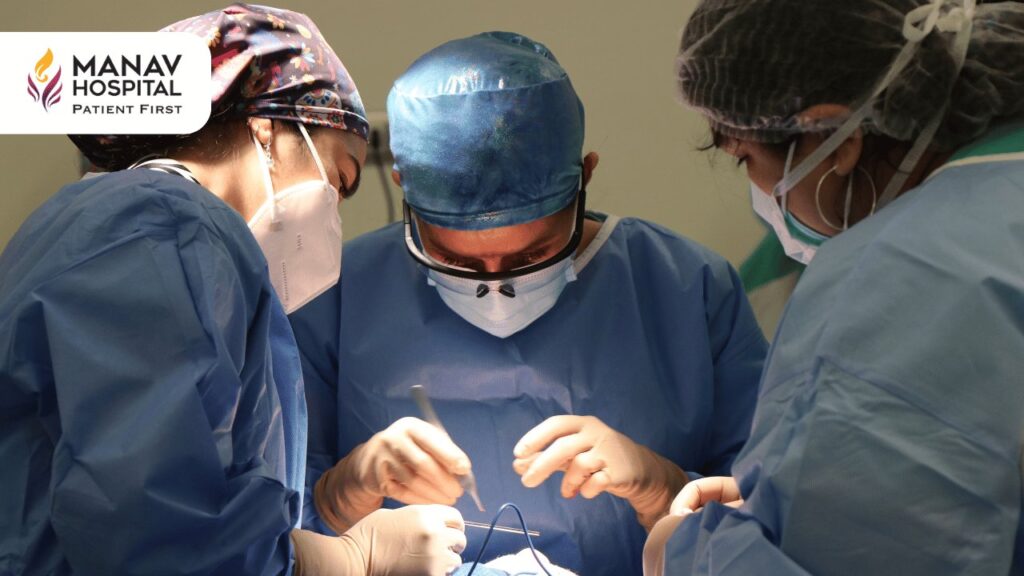
• Performing the joint replacement itself within a planned timeframe
• Monitoring for complications during and immediately after surgery
• Coordinating with the anaesthesia and nursing teams throughout
• Guiding the first attempt at standing within 24 hours
A well-run surgery day depends on this coordination running smoothly at every stage.
Meet Dr. Sharad Gupta – Trusted Name in Hip Replacement Surgery
Patients want a surgeon whose surgery day runs like a well-rehearsed process, not an improvised one.
Professional Highlights:
• Over 20 years in orthopaedic and joint replacement surgery
• More than 2,000 joint replacement procedures performed
• Fellowship training in Arthroplasty and revision cases
• Known for calm, clear communication with anxious patients and families
• Structured, predictable approach to pre- and post-surgical care
Dr. Gupta’s team keeps families informed at each stage of surgery day, which patients say removes much of the anxiety that comes from not knowing what’s happening.
Advanced Hip Replacement Procedures Offered
1. Standard Total Hip Replacement
The typical one-to-two-hour procedure for most patients.
2. Minimally Invasive Hip Replacement
A smaller-incision approach offering:
• Reduced post-operative pain
• Shorter hospital stay
• Earlier mobilisation
• Less visible scarring
3. Spinal or General Anaesthesia Options
Chosen based on patient health and surgeon judgement.
4. Revision Hip Surgery
For patients returning with a failed prior implant.
Why Choose Manav Hospital for Hip Replacement Surgery Day?
Key advantages:
• A modular, infection-controlled operation theatre
• Continuous vital sign monitoring throughout the procedure
• ICU backup on the same premises for added safety
• Structured pain management from the moment surgery ends
• Physiotherapists present for the first walking attempt
A hospital that plans surgery day around patient comfort, not just the operation itself, tends to produce a smoother experience overall.
Signs the Day Is Going Normally
Common, and usually normal, sensations on surgery day:
• Grogginess as anaesthesia wears off
• Mild to moderate discomfort managed by scheduled medication
• Stiffness around the surgical site
• A longer-than-expected theatre time due to individual anatomy
• Swelling that begins settling by the second day
• Fatigue in the first 24 to 48 hours
Dr. Sharad Gupta’s team addresses any specific worry directly rather than leaving patients to sit with it silently.
Step-by-Step Hip Replacement Surgery Day
1. Morning Admission
Final blood tests, ECG, and a last conversation with the anaesthesia team.
2. Pre-Surgical Preparation
Consent is reviewed, and any final questions are answered.
3. The Surgery
The damaged joint is replaced with an implant, typically in one to two hours.
4. Immediate Recovery
Pain management begins right away, with continuous monitoring.
5. Standing for the First Time
Physiotherapists guide the first attempt within 24 hours to reduce clot risk.
Benefits of Understanding the Surgery Day Timeline
• ✔ Reduced anxiety going into the procedure
• ✔ Clearer expectations for family members waiting
• ✔ Better preparation for what to pack and expect
• ✔ Faster recognition of what’s normal versus concerning
• ✔ A calmer, more confident recovery start
Knowing the timeline in advance consistently makes the day feel far less overwhelming.
Recovery and Rehabilitation: The Key to Success
Recovery begins the moment the procedure ends, not after discharge.
Post-surgery care includes:
• Pain scale check-ins on a regular schedule
• Early mobilisation with a walker or crutches
• Wound monitoring for infection or unusual swelling
• A written medication and warning-sign checklist before discharge
• A follow-up physiotherapy visit within the first week
Most patients are discharged within 3 to 5 days, with fuller recovery continuing over 2 to 3 months.
Why Ghaziabad is a Preferred Destination for Hip Replacement
• Experienced surgeons with high procedure volumes
• ICU-backed, infection-controlled operating theatres
• Round-the-clock emergency and nursing support
• More cost-effective than many metro alternatives
• Structured rehabilitation systems for full recovery
This makes Manav Hospital a practical and reassuring choice for planning surgery day itself.
Conclusion
Knowing what actually happens, hour by hour, turns an intimidating unknown into a manageable, well-mapped day. Dr. Sharad Gupta and the team at Manav Hospital have refined this process over thousands of procedures.
That preparation is what allows patients and families to walk in with confidence instead of dread.
Take the first step toward a well-prepared surgery day and book a consultation here.
FAQ SECTION (SEO + SCHEMA READY)
Frequently Asked Questions
Who is the best orthopaedic surgeon for hip replacement in Ghaziabad?
Dr. Sharad Gupta, associated with Manav Hospital, is a trusted name for hip replacement in Ghaziabad. See patient stories on Instagram.
How long does the surgery itself take?
The procedure typically takes one to two hours, though total theatre time including preparation may be longer.
When will I stand for the first time?
Most patients attempt standing with support within 24 hours, guided by a physiotherapist.
How long is the hospital stay?
Most patients stay 3 to 5 days, depending on recovery progress.
What should family members expect on surgery day?
Families are usually updated shortly after the procedure, with clearer communication possible once the patient is more alert.