
Overview
Hip pain that limits walking, sitting, or sleeping is often the first sign that a joint has worn past what physiotherapy or medication can manage. Before agreeing to anything, it helps to start by consulting an orthopaedic surgeon for hip replacement in Ghaziabad who is willing to explain the diagnosis in plain terms rather than rushing to a surgery date. Dr. Sharad Gupta, associated with Manav Hospital, brings over two decades of experience and more than 2,000 joint replacement surgeries to this conversation, and patients across Delhi-NCR consult him specifically for how directly he answers hard questions.
What Does an Orthopaedic Hip Replacement Surgeon Do?
A hip replacement surgeon’s job starts well before the operating theatre.
Core responsibilities include:
- Reading X-rays and MRI scans to confirm what’s actually damaged in the joint
- Ruling out or exhausting non-surgical options first, like physiotherapy or injections
- Deciding between standard and minimally invasive surgical techniques
- Selecting implant material suited to the patient’s age and activity level
- Guiding physiotherapy and follow-up care through the full recovery window
Choosing a surgeon who takes each of these steps seriously matters more than choosing one with the most impressive framed certificates.
Meet Dr. Sharad Gupta – Trusted Name in Hip Replacement Surgery
Patients evaluating a hip surgeon are really looking for two things: proof of hands-on skill, and a surgeon who won’t dodge direct questions. Dr. Sharad Gupta has built a practice around both.
Professional Highlights:
- Over 20 years in orthopaedic and joint replacement surgery
- More than 2,000 joint replacement procedures performed
- Fellowship training in Arthroplasty, including complex and revision cases
- Specialisation in both standard and minimally invasive hip replacement
- Known for transparent, patient-first consultations
Dr. Gupta’s approach pairs modern surgical technology with a genuinely personal style of care, where every question about diagnosis, cost, or recovery gets a direct answer rather than a vague reassurance.
Advanced Hip Replacement Procedures Offered
Not every hip case needs the same surgical approach.
1. Standard Total Hip Replacement
The full ball-and-socket joint is replaced with an artificial implant, suited to patients with significant joint damage.
2. Minimally Invasive Hip Replacement
Smaller incisions and less muscle disruption, which can mean:
- Shorter hospital stays
- Reduced post-operative pain
- Faster return to walking
- Less visible scarring
3. Revision Hip Arthroplasty
For patients whose earlier implant has loosened, worn out, or failed.
4. Complex and Deformity Correction Surgery
For hips affected by prior trauma, fracture, or significant anatomical deviation.
Why Choose Manav Hospital for Hip Replacement in Ghaziabad?
The surgeon’s skill only goes as far as the facility supporting them.
Key advantages:
- A dedicated, modular orthopaedic operation theatre
- ICU backup available on the same premises
- In-house radiology and diagnostic imaging
- Structured post-operative pain management protocols
- On-site physiotherapy and rehabilitation support
A hospital that can answer facility questions as readily as clinical ones is one worth trusting with major surgery.
Signs You May Need Hip Replacement
Patients often wait far longer than they should before booking a first consultation.
Consult an orthopaedic surgeon if you experience:
- Persistent hip pain that disrupts sleep
- Stiffness that makes standing up from a chair difficult
- A noticeable limp that has developed gradually
- Pain that doesn’t ease with rest or medication
- Reduced range of motion in the joint
- Pain radiating into the groin or thigh
Dr. Sharad Gupta evaluates each of these symptoms individually, since the same complaint can point to very different underlying causes.
Step-by-Step Hip Replacement Journey
1. Initial Consultation
Diagnosis is reviewed using imaging, and non-surgical options are discussed first.
2. Pre-Surgical Workup
Blood tests, ECG, and anaesthesia evaluation confirm the patient is fit for surgery.
3. The Surgery Itself
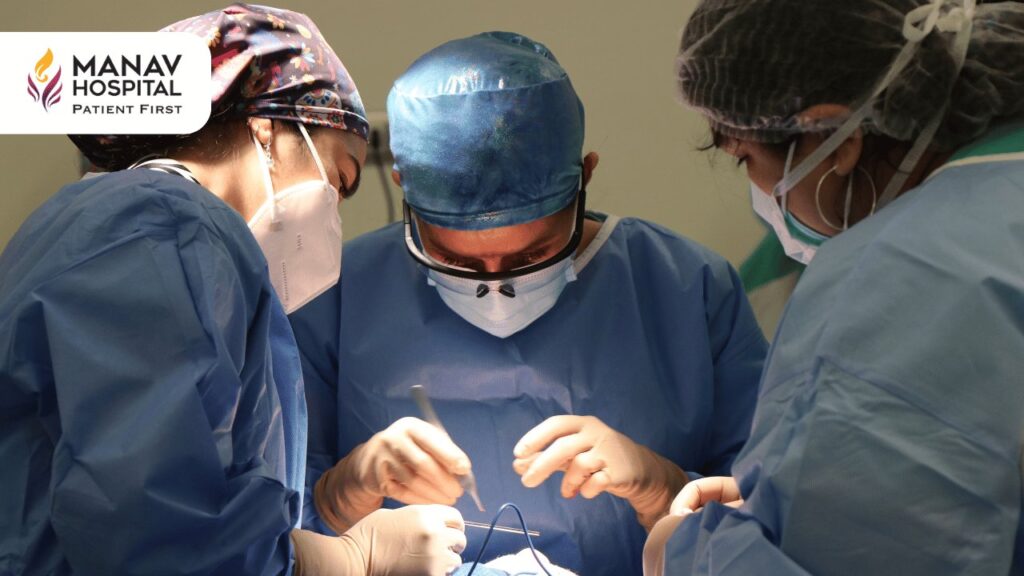
The damaged joint is replaced with an implant suited to the patient’s anatomy, typically in one to two hours.
4. Early Recovery
Patients are guided to attempt standing with support within 24 hours.
5. Rehabilitation
Structured physiotherapy over several weeks restores strength and mobility.
Benefits of Hip Replacement
Dr. Sharad Gupta’s patients consistently report a level of relief that non-surgical treatment couldn’t provide.
- ✔ Significant reduction in chronic joint pain
- ✔ Restored ability to walk without support
- ✔ Improved sleep once pain no longer disrupts it
- ✔ Implants that can last 15 to 20 years with proper care
- ✔ Return to most everyday activities within weeks
Modern hip replacement has one of the highest success and satisfaction rates of any major orthopaedic procedure.
Recovery and Rehabilitation: The Key to Success
Recovery doesn’t end at discharge. It continues through weeks of structured physiotherapy and gradual return to activity.
Post-surgery care includes:
- Early mobilisation with a walker or crutches
- Scheduled pain management in the first 48 hours
- Wound care and infection monitoring
- A written physiotherapy plan for home
- Follow-up visits to track healing progress
Most patients return to normal daily activity within 6 to 12 weeks, with full recovery continuing over several months.
Why Ghaziabad is a Preferred Destination for Hip Replacement
- Experienced orthopaedic surgeons with high surgical volumes
- Modern operation theatres with infection-control protocols
- ICU and emergency backup on the same premises
- More affordable treatment than many metro alternatives
- Established physiotherapy and rehabilitation systems
Conclusion
Choosing the right hip replacement surgeon comes down to a willingness to answer hard questions honestly, not just a list of qualifications. Dr. Sharad Gupta and the orthopaedic team at Manav Hospital have built their reputation on exactly that kind of transparency.
Their approach centres on precision, safety, and outcomes that hold up years after the surgery itself.
Take the first step toward pain-free movement and book a consultation here.
FAQs
1. Who is the best orthopaedic surgeon for hip replacement in Ghaziabad?
Ans. Dr. Sharad Gupta, associated with Manav Hospital, is widely regarded as a leading name in hip replacement surgery in Ghaziabad. You can see patient updates on his Instagram.
2. When should I consider hip replacement?
Ans. When pain, stiffness, or reduced mobility persist despite physiotherapy and medication, and imaging confirms significant joint damage.
3. Is minimally invasive hip replacement better than the traditional approach?
Ans. It depends on your anatomy and bone quality. A transparent surgeon explains which approach fits your specific case.
4. How long does recovery take?
Ans. Most patients attempt standing within 24 hours and return to normal activity within 6 to 12 weeks.
5. How long do hip implants last?
Ans. Modern implants typically last 15 to 20 years or longer with proper care.