Overview
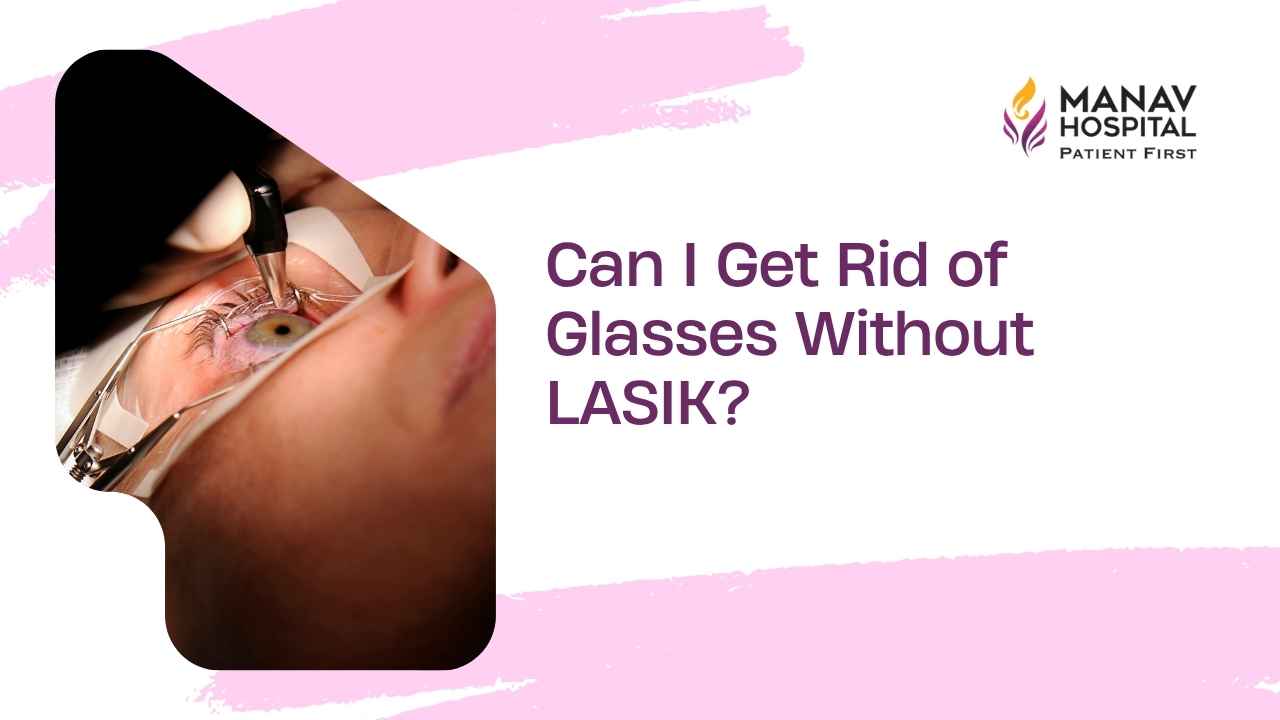
Most people assume LASIK is the only real way to get rid of glasses permanently, so when a doctor tells them they aren’t a good candidate for it, the conversation usually stops there. That assumption isn’t quite right. There’s a second surgical option that works differently and suits a specific group of patients even better, and it’s worth understanding before writing off spec-free vision altogether. If your prescription is unusually high or your cornea is on the thinner side, ICL Lens Surgery in Ghaziabad is very likely the option your doctor should be discussing with you.
At Manav Hospital’s ophthalmology department, this procedure is handled by Dr. Rajat Gupta, who has treated a large number of ICL cases in Ghaziabad and consistently walks patients through why one technique suits their eyes better than another before recommending anything.
What Makes ICL Different From LASIK?
The core difference comes down to what each procedure actually touches:
● LASIK surgery reshapes the cornea using a laser to correct how light bends as it enters the eye
● ICL surgery leaves the cornea completely untouched and instead places a lens inside the eye
● The ICL sits just in front of the eye’s natural lens, working alongside it rather than replacing anything
● Because no corneal tissue is removed, ICL works for prescriptions that would be unsafe to correct with laser surgery
The two procedures solve the same problem through entirely different means, which is exactly why one can succeed where the other isn’t advisable.
Meet Dr. Rajat Gupta – Ophthalmologist for ICL Lens Surgery in Ghaziabad
Patients weighing ICL against LASIK want a doctor who explains the actual difference rather than pushing whichever procedure the clinic happens to promote more.
Professional Highlights:
● Ophthalmologist at Manav Hospital, Ghaziabad, with a focus on refractive and cataract surgery
● Extensive experience performing ICL, LASIK, and Contoura Vision procedures
● Known among patients for explaining imaging and candidacy assessments in plain language before recommending treatment
● Part of a team that has performed over 80,000 surgeries at Manav Hospital
Patients frequently mention in reviews that Dr. Rajat Gupta took time to explain their specific eye measurements before recommending ICL over LASIK, rather than assuming one procedure fits everyone.
Who Actually Needs ICL Instead of LASIK?
1. Very High Prescriptions
Patients with high myopia often don’t have enough corneal thickness to safely reshape with a laser. ICL surgery sidesteps that limitation entirely since it doesn’t touch the cornea.
2. Thin Corneas
Some people are simply born with corneas thinner than the average range needed for LASIK, regardless of their prescription. ICL remains an option in these cases where laser correction would carry unnecessary risk.
3. Chronic Dry Eyes
LASIK can temporarily worsen dry eye symptoms during healing. Patients already managing dry eyes sometimes find this uncomfortable, and ICL avoids that particular side effect since the corneal nerves involved in tear production aren’t disturbed.
4. Patients Who Also Have Early Cataract Concerns
Some patients considering ICL are also monitoring early lens changes. In those cases the team may discuss cataract surgery timing alongside the ICL conversation to plan long-term eye health properly.
Why Choose Manav Hospital for ICL Lens Surgery in Ghaziabad?
Key advantages:
● Detailed pre-surgical evaluation to confirm actual candidacy, not a default recommendation
● Experience across ICL, LASIK, and Contoura Vision under the same ophthalmology team
● Modern diagnostic equipment for precise corneal and lens measurements
● A track record built over decades of eye care in Ghaziabad and Delhi-NCR
● Transparent explanation of why ICL suits certain eyes better than laser correction
A hospital that recommends ICL because your eyes actually call for it, not because it’s a higher priced procedure, is the kind of honesty worth choosing a surgeon for.
Signs You Should Ask About ICL Instead of LASIK
Consider asking about ICL if:
● You’ve already been told your prescription is too high for LASIK surgery
● A previous consultation mentioned your cornea is thinner than average
● You deal with dry eyes regularly and worry about surgery making it worse
● You want to remove glasses but haven’t been given a clear reason why laser correction isn’t suggested for you
● You’re comparing costs and outcomes between the two procedures before deciding
Most patients who eventually choose ICL only discover it exists after being told LASIK wasn’t a safe fit for them, which is exactly the gap a proper consultation should close earlier.
Step-by-Step ICL Surgery Journey
1. Initial Eye Examination
Corneal thickness, prescription strength, and overall eye health are measured at the ophthalmology department to confirm candidacy.
2. Lens Sizing and Customisation
A lens is custom made to match the patient’s exact eye measurements, which typically takes a short waiting period.
3. The Procedure
The lens is inserted through a small incision under local anaesthesia, usually completed within 20 to 30 minutes per eye.
4. Immediate Recovery
Most patients notice a visible improvement in vision within hours, with some blurriness settling over the next day.
5. Follow-Up Checks
Vision and eye pressure are reviewed at scheduled intervals to confirm the ICL lens has settled correctly.
Benefits of ICL Lens Surgery
✔ Works for prescriptions too high for LASIK to correct safely
✔ Leaves the cornea completely untouched
✔ Doesn’t worsen existing dry eye symptoms the way LASIK sometimes can
✔ Offers sharp, high quality vision comparable to or better than LASIK for the right candidates
✔ Can be adjusted or removed in rare cases where vision needs change significantly
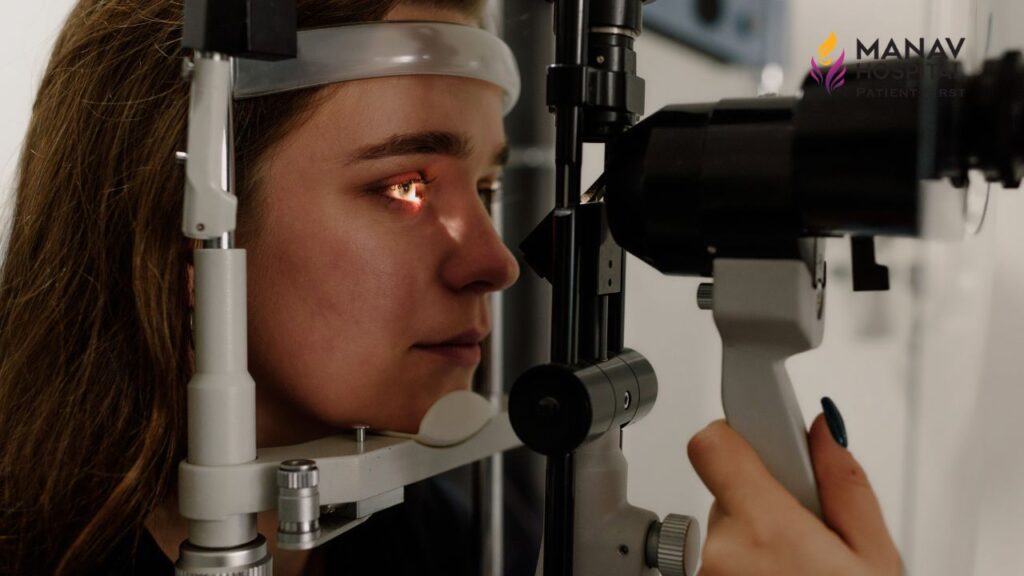
For patients who assumed glasses were permanent simply because LASIK wasn’t an option, ICL often changes that conclusion entirely.
Recovery After ICL Surgery
What recovery typically looks like:
● Mild sensitivity to light for the first day or two, easing quickly
● Prescribed eye drops used for a few weeks to support healing
● Most patients resume normal daily activities within two to three days
● Strenuous exercise and swimming are avoided for the first couple of weeks
● Follow-up visits scheduled at Manav Hospital to confirm the eye is healing as expected
Recovery from ICL is generally quick, with most of the initial adjustment period lasting only a few days rather than weeks.
Why Ghaziabad Patients Choose Manav Hospital for ICL
● Decades of dedicated ophthalmology care serving Ghaziabad and Delhi-NCR
● A team led by experienced surgeons including Dr. Harish Gupta and Dr. Rajat Gupta
● Honest candidacy evaluation instead of a one-size-fits-all recommendation
● Access to the full range of vision correction options, not just one procedure
● Consistently positive patient feedback specifically around ICL outcomes
When LASIK isn’t the right fit, patients in Ghaziabad don’t need to give up on removing their glasses. They need a clinic willing to explain why ICL might be the better answer.
Conclusion
Getting rid of glasses without LASIK isn’t a compromise or a fallback option. For a specific group of patients, ICL is genuinely the more suitable procedure, not a consolation prize for those who don’t qualify for laser correction. Dr. Rajat Gupta and the ophthalmology team at Manav Hospital take the time to determine which category a patient falls into before recommending either path.
For questions about your candidacy or to discuss your prescription in detail, email info.manavhospital@gmail.com or call +91-9718942666. Follow patient outcomes and eye care updates on Instagram and YouTube.
Book your ICL lens consultation with Manav Hospital here.
FAQs
Is ICL surgery a good alternative to LASIK?
Yes, particularly for patients with high prescriptions, thin corneas, or dry eyes that make LASIK unsuitable. It corrects vision without touching the cornea at all.
Is ICL surgery permanent?
The lens is designed for long-term use and typically isn’t removed, though it can technically be exchanged or removed if a patient’s vision needs change significantly over time.
Does ICL surgery hurt?
The procedure is performed under local anaesthesia, so patients don’t feel pain during the surgery itself. Mild sensitivity for a day or two afterward is normal.
How is ICL different from cataract surgery?
Both involve placing a lens inside the eye, but ICL is added alongside the eye’s natural lens for vision correction, while cataract surgery replaces a clouded natural lens entirely.
How do I know if I’m a candidate for ICL instead of LASIK?
A detailed eye examination measuring corneal thickness, prescription, and overall eye health determines candidacy. Dr. Rajat Gupta reviews these factors directly before recommending either procedure.