Overview
Patients often assume extraction is the simpler, cheaper option, without realising a missing tooth usually needs replacing later at a higher overall cost. Making this decision properly starts with consulting a dental surgeon for root canal treatment in Ghaziabad who examines the tooth directly rather than deciding by pain level alone. Dr. Kanika Gupta, associated with Manav Hospital, brings years of hands-on experience in rotary endodontics and has treated the full range of root canal and extraction cases.
What Does a Root Canal Surgeon Do?
Core responsibilities include:
• Reading imaging to confirm how much of the tooth is salvageable
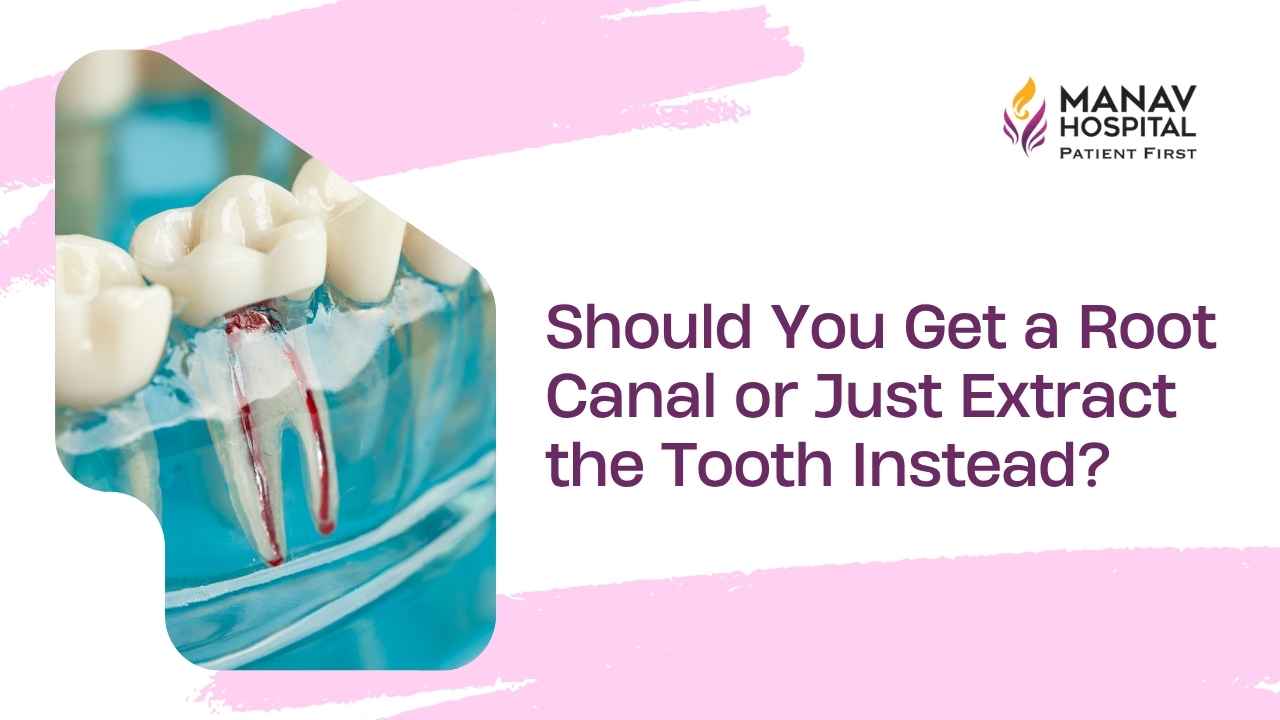
• Removing infected or inflamed pulp tissue from the canal
• Cleaning, shaping, and sealing the inner canal structure
• Recommending a crown where needed to protect the treated tooth
• Advising on extraction and replacement when the tooth isn’t salvageable
Choosing the right specialist for this decision protects both your natural tooth and your long-term cost.
Meet Dr. Kanika Gupta – Trusted Name in Root Canal Treatment
Patients want a dentist who explains imaging clearly and doesn’t default to extraction for convenience.
Professional Highlights:
• Master’s degree in dental surgery with specialised endodontic training
• Skilled in rotary endodontics and root canal therapy
• Life member of the Indian Society of Oral Implantologists (ISOI)
• Experience across full-mouth rehabilitation and restorative dentistry
• Known for showing patients their own imaging before recommending treatment
Dr. Gupta walks every patient through their scan and explains exactly why one option is being recommended over the other, rather than offering a generic answer.
Advanced Root Canal & Restoration Options Offered
1. Rotary Endodontic Root Canal Treatment
Modern rotary instruments clean and shape the canal with greater precision, offering:
• Faster, more comfortable treatment
• Reduced risk of missed canal structures
• A smoother path to a lasting crown placement
• Typically completed in one to two visits
2. Crown Placement After Root Canal
Protects the treated tooth from cracking under normal chewing pressure.
3. Tooth Extraction
For teeth with extensive fracture or bone loss that a root canal cannot reasonably save.
4. Dental Implants After Extraction
A long-term replacement option when a tooth must be removed.
Why Choose Manav Hospital for Root Canal Treatment in Ghaziabad?
Key advantages:
• In-house imaging to assess canal structure and bone condition
• Modern rotary endodontic instruments and technique
• A dedicated dental treatment room with strict sterilisation protocols
• Clear, written cost comparisons between root canal and extraction
• Follow-up checkups to confirm the treated tooth is holding up
A dental team confident in its diagnosis explains both the root canal and extraction paths honestly, not just the one that’s easier to perform.
Signs You May Need a Root Canal Evaluation
Consult a dental surgeon if you experience:
• Persistent throbbing pain in a specific tooth
• Visible swelling in the gum near a tooth
• Lingering sensitivity to hot or cold that doesn’t fade quickly
• A tooth that has noticeably darkened
• A bad taste that won’t go away
• Pain that worsens rather than settles over a few days
Dr. Kanika Gupta evaluates each of these signs directly rather than assuming the worst without imaging.
Step-by-Step Root Canal Journey
1. Initial Consultation
Imaging confirms whether the tooth is suitable for root canal treatment.
2. Local Anaesthesia
The area is numbed before any instrumentation begins.
3. Cleaning and Shaping
Infected pulp is removed, and the canal is cleaned and shaped.
4. Sealing the Tooth
The canal is sealed with a temporary or permanent filling.
5. Crown Placement
A crown is fitted to protect the tooth long-term.

Benefits of Choosing Root Canal Over Extraction
• ✔ Preserves your natural tooth and bite
• ✔ Avoids the added cost of an implant or bridge later
• ✔ Prevents the bone changes that follow tooth loss
• ✔ Comparable comfort to a routine filling under anaesthesia
• ✔ Can last many years with a properly placed crown
Most root canal treatments succeed, and regular follow-up checkups catch the rare cases that don’t.
Recovery and Aftercare: The Key to Success
Aftercare determines how well a root canal or extraction holds up over time.
Post-treatment care includes:
• Avoiding heavy chewing on the treated tooth for the first day or two
• Continuing normal brushing and flossing around the area
• Gentle rinsing and avoiding straws after an extraction
• Watching for a loosening crown or shifting bite
• Routine six-month checkups to catch small issues early
Most patients resume normal eating within a few days, with the crown fully settling in over the following weeks.
Why Ghaziabad is a Preferred Destination for Root Canal Treatment
• Dentists trained specifically in rotary endodontics
• In-house imaging for accurate, same-visit diagnosis
• Transparent, itemised cost comparisons before treatment
• More affordable than many metro dental centres
• Established follow-up systems for long-term monitoring
This makes Manav Hospital a dependable choice for both routine and complex root canal cases.
Conclusion
Deciding between a root canal and extraction should always follow a proper examination, not pain level alone. Dr. Kanika Gupta and the dental team at Manav Hospital walk every patient through that decision using real imaging and a case-specific explanation.
Their approach favours saving the natural tooth wherever it’s genuinely possible.
Take the first step toward a clear recommendation for your tooth and book a consultation here.
Frequently Asked Questions
Who is the best dental surgeon for root canal treatment in Ghaziabad?
Dr. Kanika Gupta, associated with Manav Hospital, is a leading name in root canal and restorative dentistry. See patient updates on Instagram.
Is root canal treatment more painful than extraction?
No. Both are performed under local anaesthesia and involve similar post-treatment sensitivity.
Is extraction always cheaper than a root canal?
The extraction itself may cost less upfront, but replacing the tooth afterward often brings the total cost higher.
How long does a root canal-treated tooth last?
With a proper crown and reasonable hygiene, it can last many years, often a lifetime.
Can a badly decayed tooth still be saved?
It depends on the remaining healthy structure, which only a direct examination and X-ray can confirm.